The text
Tap Recite along to follow verse by verse — use Next, or the arrow keys.
- Opening dohas
- Doha 1 (opening)
देवि पूजिता नर्मदा, महिमा बड़ी अपार।चालीसा वर्णन करत, कवि अरु भक्त उदार॥
devi pūjitā narmadā, mahimā baḍī apāra।cālīsā varṇana karata, kavi aru bhakta udāra॥
The goddess Narmada is worshipped; her glory is vast beyond measure. Generous poets and devotees compose this Chalisa in her praise.
- Doha 2 (opening)
इनकी सेवा से सदा, मिटते पाप महान।तट पर कर जप दान नर, पाते हैं नित ज्ञान॥
inakī sevā se sadā, miṭate pāpa mahāna।taṭa para kara japa dāna nara, pāte haiṃ nita jñāna॥
By her service, even great sins are ever erased; performing japa and charity on her banks, a person continually gains wisdom.
- The 40 chaupais
- Chaupai 1
जय-जय-जय नर्मदा भवानी।तुम्हरी महिमा सब जग जानी॥
jaya-jaya-jaya narmadā bhavānī।tumharī mahimā saba jaga jānī॥
Victory, victory, victory to Narmada Bhavani — your glory is known to the whole world.
- Chaupai 2
अमरकण्ठ से निकलीं माता।सर्व सिद्धि नव निधि की दाता॥
amarakaṇṭha se nikalī̃ mātā।sarva siddhi nava nidhi kī dātā॥
Mother, you emerged from Amarkantak — giver of every siddhi and the nine treasures.
- Chaupai 3
कन्या रूप सकल गुण खानी।जब प्रकटीं नर्मदा भवानी॥
kanyā rūpa sakala guṇa khānī।jaba prakaṭī̃ narmadā bhavānī॥
In the form of a maiden, a mine of every virtue, Narmada Bhavani appeared.
- Chaupai 4
सप्तमी सूर्य मकर रविवारा।अश्वनि माघ मास अवतारा॥
saptamī sūrya makara ravivārā।aśvani māgha māsa avatārā॥
On the seventh day (Saptami), with the sun in Makara, on a Sunday, under the Ashvini nakshatra in the month of Magh, she took her incarnation.
- Chaupai 5
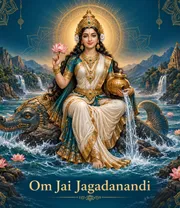
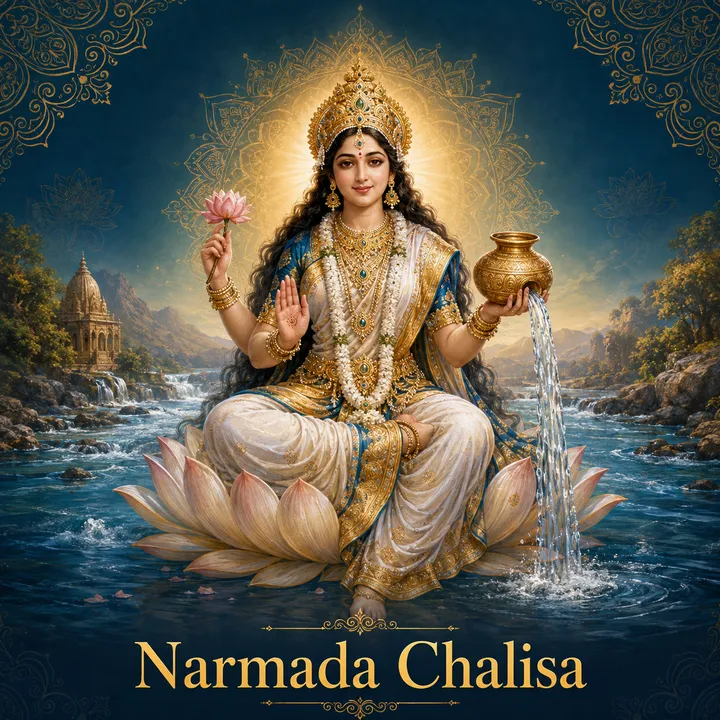
वाहन मकर आपको साजैं।कमल पुष्प पर आप विराजैं॥
vāhana makara āpako sājaiṃ।kamala puṣpa para āpa virājaiṃ॥
The crocodile is your mount and adorns you; you are enthroned upon a lotus flower.
- Chaupai 6
ब्रह्मा हरि हर तुमको ध्यावैं।तब ही मनवांछित फल पावैं॥
brahmā hari hara tumako dhyāvaiṃ।taba hī manavāṃchita phala pāvaiṃ॥
Brahma, Vishnu (Hari), and Shiva (Hara) meditate upon you, and only then do they attain the fruit their hearts desire.
- Chaupai 7
दर्शन करत पाप कटि जाते।कोटि भक्त गण नित्य नहाते॥
darśana karata pāpa kaṭi jāte।koṭi bhakta gaṇa nitya nahāte॥
Merely beholding you cuts away sin; millions of devotees bathe in you daily.
- Chaupai 8
जो नर तुमको नित ही ध्यावै।वह नर रुद्र लोक को जावैं॥
jo nara tumako nita hī dhyāvai।vaha nara rudra loka ko jāvaiṃ॥
Whoever meditates on you constantly attains the world of Rudra (Shiva).
- Chaupai 9
मगरमच्छ तुम में सुख पावैं।अन्तिम समय परमपद पावैं॥
magaramaccha tuma meṃ sukha pāvaiṃ।antima samaya paramapada pāvaiṃ॥
Even the crocodiles that dwell in you find happiness, and attain the supreme abode at their final hour.
- Chaupai 10
मस्तक मुकुट सदा ही साजैं।पांव पैंजनी नित ही राजैं॥
mastaka mukuṭa sadā hī sājaiṃ।pāṃva paiṃjanī nita hī rājaiṃ॥
A crown ever adorns your head; anklets ever grace your feet.
- Chaupai 11
कल-कल ध्वनि करती हो माता।पाप ताप हरती हो माता॥
kala-kala dhvani karatī ho mātā।pāpa tāpa haratī ho mātā॥
Mother, you flow with a gentle murmuring sound; Mother, you remove sin and suffering.
- Chaupai 12
पूरब से पश्चिम की ओरा।बहतीं माता नाचत मोरा॥
pūraba se paścima kī orā।bahatī̃ mātā nācata morā॥
From east toward the west, Mother, you flow on, as peacocks dance along your banks.
- Chaupai 13
शौनक ऋषि तुम्हरौ गुण गावैं।सूत आदि तुम्हरौ यश गावैं॥
śaunaka ṛṣi tumharau guṇa gāvaiṃ।sūta ādi tumharau yaśa gāvaiṃ॥
The sage Shaunaka sings your virtues; Suta and other sages sing your glory.
- Chaupai 14
शिव गणेश भी तेरे गुण गावैं।सकल देव गण तुमको ध्यावैं॥
śiva gaṇeśa bhī tere guṇa gāvaiṃ।sakala deva gaṇa tumako dhyāvaiṃ॥
Shiva and Ganesha too sing your virtues; every host of gods meditates upon you.
- Chaupai 15
कोटि तीर्थ नर्मदा किनारे।ये सब कहलाते दुःख हारे॥
koṭi tīrtha narmadā kināre।ye saba kahalāte duḥkha hāre॥
Millions of pilgrimage sites line Narmada's banks; every one of them is called a remover of sorrow.
- Chaupai 16
मनोकामना पूरण करती।सर्व दुःख माँ नित ही हरतीं॥
manokāmanā pūraṇa karatī।sarva duḥkha mā̃ nita hī haratī̃॥
You fulfill every heartfelt wish; Mother, you forever take away every sorrow.
- Chaupai 17
कनखल में गंगा की महिमा।कुरुक्षेत्र में सरस्वती महिमा॥
kanakhala meṃ gaṅgā kī mahimā।kurukṣetra meṃ sarasvatī mahimā॥
Ganga's glory is at Kankhal; Saraswati's glory is at Kurukshetra —
- Chaupai 18
पर नर्मदा ग्राम जंगल में।नित रहती माता मंगल में॥
para narmadā grāma jaṅgala meṃ।nita rahatī mātā maṅgala meṃ॥
but Narmada, Mother, ever dwells amid auspiciousness in every village and forest.
- Chaupai 19
एक बार करके असनाना।तरत पीढ़ी है नर नारा॥
eka bāra karake asanānā।tarata pīḍhī hai nara nārā॥
By bathing in you even once, a person's whole lineage is carried across to liberation.
- Chaupai 20
मेकल कन्या तुम ही रेवा।तुम्हरी भजन करें नित देवा॥
mekala kanyā tuma hī revā।tumharī bhajana kareṃ nita devā॥
You are Mekala's daughter, you are Reva; the gods forever chant your praise.
- Chaupai 21
जटा शंकरी नाम तुम्हारा।तुमने कोटि जनों को तारा॥
jaṭā śaṅkarī nāma tumhārā।tumane koṭi janoṃ ko tārā॥
Jata-Shankari is your name; you have delivered millions of people.
- Chaupai 22
समोद्भवा नर्मदा तुम हो।पाप मोचनी रेवा तुम हो॥
samodbhavā narmadā tuma ho।pāpa mocanī revā tuma ho॥
You are Samodbhava, you are Narmada; you are Reva, who frees from sin.
- Chaupai 23
तुम महिमा कहि नहिं जाई।करत न बनती मातु बड़ाई॥
tuma mahimā kahi nahiṃ jāī।karata na banatī mātu baḍāī॥
Your glory cannot be told in words; Mother, your greatness cannot be fully expressed.
- Chaupai 24
जल प्रताप तुममें अति माता।जो रमणीय तथा सुख दाता॥
jala pratāpa tumameṃ ati mātā।jo ramaṇīya tathā sukha dātā॥
Mother, the power of your waters is immense — beautiful, and a giver of happiness.
- Chaupai 25
चाल सर्पिणी सम है तुम्हारी।महिमा अति अपार है तुम्हारी॥
cāla sarpiṇī sama hai tumhārī।mahimā ati apāra hai tumhārī॥
Your course winds like a serpent; your glory is utterly boundless.
- Chaupai 26
तुम में पड़ी अस्थि भी भारी।छुवत पाषाण होत वर वारी॥
tuma meṃ paḍī asthi bhī bhārī।chuvata pāṣāṇa hota vara vārī॥
Even a heavy bone that falls into you is transformed, by your sacred water, into a hallowed stone.
- Chaupai 27
यमुना में जो मनुज नहाता।सात दिनों में वह फल पाता॥
yamunā meṃ jo manuja nahātā।sāta dinoṃ meṃ vaha phala pātā॥
One who bathes in the Yamuna obtains its fruit in seven days —
- Chaupai 28
सरसुति तीन दिनों में देतीं।गंगा तुरत बाद ही देतीं॥
sarasuti tīna dinoṃ meṃ detī̃।gaṅgā turata bāda hī detī̃॥
the Saraswati grants it in three days, and the Ganga soon after bathing —
- Chaupai 29
पर रेवा का दर्शन करके।मानव फल पाता मन भर के॥
para revā kā darśana karake।mānava phala pātā mana bhara ke॥
but merely by the sight of Reva, a person obtains that fruit in full, at once.
- Chaupai 30
तुम्हरी महिमा है अति भारी।जिसको गाते हैं नर-नारी॥
tumharī mahimā hai ati bhārī।jisako gāte haiṃ nara-nārī॥
Your glory is exceedingly great; men and women alike sing of it.
- Chaupai 31
जो नर तुम में नित्य नहाता।रुद्र लोक मे पूजा जाता॥
jo nara tuma meṃ nitya nahātā।rudra loka me pūjā jātā॥
One who bathes in you daily is honored in the world of Rudra (Shiva).
- Chaupai 32
जड़ी बूटियां तट पर राजें।मोहक दृश्य सदा ही साजें॥
jaḍī būṭiyāṃ taṭa para rājeṃ।mohaka dṛśya sadā hī sājeṃ॥
Medicinal herbs flourish upon your banks; an enchanting sight is ever arrayed there.
- Chaupai 33
वायु सुगन्धित चलती तीरा।जो हरती नर तन की पीरा॥
vāyu sugandhita calatī tīrā।jo haratī nara tana kī pīrā॥
A fragrant breeze moves along your shore, which takes away the body's every pain.
- Chaupai 34
घाट-घाट की महिमा भारी।कवि भी गा नहिं सकते सारी॥
ghāṭa-ghāṭa kī mahimā bhārī।kavi bhī gā nahiṃ sakate sārī॥
The glory of your every ghat is immense; not even poets can sing all of it.
- Chaupai 35
नहिं जानूँ मैं तुम्हरी पूजा।और सहारा नहीं मम दूजा॥
nahiṃ jānū̃ maiṃ tumharī pūjā।aura sahārā nahīṃ mama dūjā॥
I do not know how to worship you properly; I have no other refuge but you.
- Chaupai 36
हो प्रसन्न ऊपर मम माता।तुम ही मातु मोक्ष की दाता॥
ho prasanna ūpara mama mātā।tuma hī mātu mokṣa kī dātā॥
Mother, be pleased with me; you alone, Mother, are the giver of liberation.
- Chaupai 37
जो मानव यह नित है पढ़ता।उसका मान सदा ही बढ़ता॥
jo mānava yaha nita hai paḍhatā।usakā māna sadā hī baḍhatā॥
Whoever recites this daily, their honor ever increases.
- Chaupai 38
जो शत बार इसे है गाता।वह विद्या धन दौलत पाता॥
jo śata bāra ise hai gātā।vaha vidyā dhana daulata pātā॥
Whoever sings it a hundred times obtains learning, wealth, and prosperity.
- Chaupai 39
अगणित बार पढ़ै जो कोई।पूरण मनोकामना होई॥
agaṇita bāra paḍhai jo koī।pūraṇa manokāmanā hoī॥
Whoever reads it countless times has every heartfelt wish fulfilled.
- Chaupai 40
सबके उर में बसत नर्मदा।यहां वहां सर्वत्र नर्मदा॥
sabake ura meṃ basata narmadā।yahāṃ vahāṃ sarvatra narmadā॥
Narmada dwells in every heart; here, there, and everywhere — Narmada.
- Closing doha
- Doha (closing)
भक्ति भाव उर आनि के, जो करता है जाप।माता जी की कृपा से, दूर होत सन्ताप॥
bhakti bhāva ura āni ke, jo karatā hai jāpa।mātā jī kī kṛpā se, dūra hota santāpa॥
Whoever brings devotion into their heart and performs this recitation — by the Mother's grace, all suffering is taken away.
Overview
The Narmada Chalisa is a Hindi devotional composition of forty chaupai in praise of the river Narmada, revered across Hindu tradition as a goddess, a mother, and one of India’s seven sacred rivers. Framed by two opening dohas and a closing doha, it follows the familiar chalisa pattern shared with the Ganga Chalisa and other river hymns: verses describing the goddess’s iconography — her crocodile mount, her lotus seat, her crown and anklets — and its own catalogue of the merit said to come from bathing in her waters, beholding her, or simply speaking her name. Several verses explicitly compare Narmada’s power to that of the Ganga, Yamuna, and Saraswati, a common device in this genre that places the praised river above the others in ease of blessing.
Origin and source
The Narmada Chalisa’s authorship is not indicated within the text itself — unlike the Ganesh and Ganga Chalisas, which each name a composer in their closing verses, this chalisa closes without any such signature — and no firm attribution has been found in the secondary sources consulted for this page. It is treated here as a traditional, anonymous composition recited across Hindu practice.
The verses preserve a specific account of Narmada’s appearance: born at Amarkantak, on a Sunday, on the seventh day (Saptami) of the bright fortnight, under the Ashvini nakshatra in the month of Magh (chaupai 2 and 4) — the same date on which Narmada Jayanti is traditionally observed. The text calls her “Mekala’s daughter” (chaupai 20), reflecting the tradition that places her origin at the Mekala hills near Amarkantak in the Vindhya-Satpura range, and also “Jata-Shankari” (chaupai 21), an epithet tying her to Shiva that some Puranic accounts explain by describing her as having arisen from his body during his tapas at Amarkantak — an origin story distinct from the Mekala-lineage tradition, and the chalisa itself does not resolve which account it intends. The verses also touch on the widely held belief that stones taken from the Narmada’s bed are themselves sacred, transformed by contact with her waters (chaupai 26) — the basis for the Narmadeshwar (bana-lingam) stones used in Shiva worship across India.
How it is recited
The Narmada Chalisa is recited by devotees at her ghats and temples along the river’s length, and especially on Narmada Jayanti, her annual birth festival. It is also read by those undertaking the Narmada Parikrama — a pilgrimage in which devotees circumambulate the entire river on foot along both banks, from her source at Amarkantak to the Arabian Sea and back, a journey some traditionally complete over several years. Amarkantak itself, named in the chalisa’s own second chaupai as the place of her appearance, remains a principal site of her worship.
Frequently asked questions
How many verses does Narmada Chalisa have?
Who is Narmada Chalisa dedicated to?
When is Narmada Chalisa typically recited?
What language is Narmada Chalisa composed in?
What tradition is Narmada Chalisa associated with?
Is an English translation of Narmada Chalisa available?
Is there a Roman transliteration of Narmada Chalisa?
Sourcing
Checked against independent sources before publishing — see our sourcing and editorial policy. Spotted an error? Report an issue .