The text
Tap Recite along to follow verse by verse — use Next, or the arrow keys.
- Opening dohas
- Doha 1 (opening)
श्री गणपति गुरुपद कमल, प्रेम सहित सिरनाय।नवग्रह चालीसा कहत, शारद होत सहाय॥
śrī gaṇapati gurupada kamala, prema sahita siranāya।navagraha cālīsā kahata, śārada hota sahāya॥
Bowing my head with love at the lotus feet of Shri Ganapati and of my guru, I tell the Navagraha Chalisa; may Sharada be my help.
- Doha 2 (opening)
जय जय रवि शशि सोम बुध, जय गुरु भृगु शनि राज।जयति राहु अरु केतु ग्रह, करहु अनुग्रह आज॥
jaya jaya ravi śaśi soma budha, jaya guru bhṛgu śani rāja।jayati rāhu aru ketu graha, karahu anugraha āja॥
Victory, victory to Ravi, Shashi, Soma and Budha; victory to Guru, Bhrigu and King Shani. Victory to the planets Rahu and Ketu — show me your favour today.
- The 40 chaupais
- Chaupai 1 (Surya)
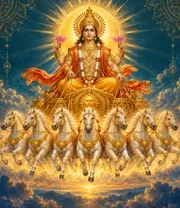
प्रथमहि रवि कहँ नावौं माथा।करहुं कृपा जनि जानि अनाथा॥
prathamahi ravi kahã nāvauṃ māthā।karahuṃ kṛpā jani jāni anāthā॥
First of all I bow my head to Ravi: show me grace, and do not count me as one without protector.
- Chaupai 2 (Surya)
हे आदित्य दिवाकर भानू।मैं मति मन्द महा अज्ञानू॥
he āditya divākara bhānū।maĩ mati manda mahā ajñānū॥
O Aditya, Divakar, Bhanu — I am dull of wit and deeply ignorant.
- Chaupai 3 (Surya)
अब निज जन कहँ हरहु कलेषा।दिनकर द्वादश रूप दिनेशा॥
aba nija jana kahã harahu kaleṣā।dinakara dvādaśa rūpa dineśā॥
Now take away your own servant's affliction, Dinakar, Dinesha of the twelve forms.
- Chaupai 4 (Surya)
नमो भास्कर सूर्य प्रभाकर।अर्क मित्र अघ मोघ क्षमाकर॥
namo bhāskara sūrya prabhākara।arka mitra agha mogha kṣamākara॥
Salutations, Bhaskar, Surya, Prabhakar; Arka, Mitra — you who make sin fruitless and who grant pardon.
- Chaupai 5 (Chandra)
शशि मयंक रजनीपति स्वामी।चन्द्र कलानिधि नमो नमामि॥
śaśi mayaṃka rajanīpati svāmī।candra kalānidhi namo namāmi॥
Shashi, Mayank, lord of the night, master; Chandra, treasury of the lunar digits — I bow, I bow.
- Chaupai 6 (Chandra)
राकापति हिमांशु राकेशा।प्रणवत जन तन हरहुं कलेशा॥
rākāpati himāṃśu rākeśā।praṇavata jana tana harahuṃ kaleśā॥
Lord of the full moon, Himanshu, Rakesha — take the affliction from the bodies of those who bow to you.
- Chaupai 7 (Chandra)
सोम इन्दु विधु शान्ति सुधाकर।शीत रश्मि औषधि निशाकर॥
soma indu vidhu śānti sudhākara।śīta raśmi auṣadhi niśākara॥
Soma, Indu, Vidhu, peace-giving Sudhakar; cool-rayed one, healing herb, maker of the night.
- Chaupai 8 (Chandra)
तुम्हीं शोभित सुन्दर भाल महेशा।शरण शरण जन हरहुं कलेशा॥
tumhī̃ śobhita sundara bhāla maheśā।śaraṇa śaraṇa jana harahuṃ kaleśā॥
It is you who adorn the beautiful brow of Mahesha; take the affliction from those who come again and again for refuge.
- Chaupai 9 (Mangal)
जय जय जय मंगल सुखदाता।लोहित भौमादिक विख्याता॥
jaya jaya jaya maṅgala sukhadātā।lohita bhaumādika vikhyātā॥
Victory, victory, victory to Mangal, giver of happiness — renowned as Lohit, as Bhauma and by more names besides.
- Chaupai 10 (Mangal)
अंगारक कुज रुज ऋणहारी।करहु दया यही विनय हमारी॥
aṃgāraka kuja ruja ṛṇahārī।karahu dayā yahī vinaya hamārī॥
Angarak, Kuja, remover of sickness and of debt — show us mercy; this is our plea.
- Chaupai 11 (Mangal)
हे महिसुत छितिसुत सुखराशी।लोहितांग जय जन अघनाशी॥
he mahisuta chitisuta sukharāśī।lohitāṅga jaya jana aghanāśī॥
O son of the earth, child of the soil, heap of happiness — red-limbed one, victory to you, destroyer of your people's sin.
- Chaupai 12 (Mangal)
अगम अमंगल अब हर लीजै।सकल मनोरथ पूरण कीजै॥
agama amaṅgala aba hara lījai।sakala manoratha pūraṇa kījai॥
Take away now the unfathomable ill fortune; make every wish of ours complete.
- Chaupai 13 (Budh)
जय शशि नन्दन बुध महाराजा।करहु सकल जन कहँ शुभ काजा॥
jaya śaśi nandana budha mahārājā।karahu sakala jana kahã śubha kājā॥
Victory, Budha Maharaj, son of the moon — bring the work of every person to a good end.
- Chaupai 14 (Budh)
दीजै बुद्धि बल सुमति सुजाना।कठिन कष्ट हरि करि कल्याणा॥
dījai buddhi bala sumati sujānā।kaṭhina kaṣṭa hari kari kalyāṇā॥
Grant intelligence, strength, good sense and discernment; take away hard suffering and do us good.
- Chaupai 15 (Budh)
हे तारासुत रोहिणी नन्दन।चन्द्रसुवन दुख द्वन्द्व निकन्दन॥
he tārāsuta rohiṇī nandana।candrasuvana dukha dvandva nikandana॥
O son of Tara, delight of Rohini; child of the moon, destroyer of sorrow and strife.
- Chaupai 16 (Budh)
पूजहु आस दास कहु स्वामी।प्रणत पाल प्रभु नमो नमामी॥
pūjahu āsa dāsa kahu svāmī।praṇata pāla prabhu namo namāmī॥
Fulfil your servant's hope, Lord; protector of those who bow, Lord, I bow and bow again.
- Chaupai 17 (Brihaspati)
जयति जयति जय श्री गुरुदेवा।करूं सदा तुम्हरी प्रभु सेवा॥
jayati jayati jaya śrī gurudevā।karūṃ sadā tumharī prabhu sevā॥
Victory, victory, victory to Shri Gurudev; may I serve you always, Lord.
- Chaupai 18 (Brihaspati)
देवाचार्य तुम देव गुरु ज्ञानी।इन्द्र पुरोहित विद्यादानी॥
devācārya tuma deva guru jñānī।indra purohita vidyādānī॥
Teacher of the gods, you are their wise preceptor; Indra's priest, giver of learning.
- Chaupai 19 (Brihaspati)
वाचस्पति बागीश उदारा।जीव बृहस्पति नाम तुम्हारा॥
vācaspati bāgīśa udārā।jīva bṛhaspati nāma tumhārā॥
Vachaspati, lord of speech, open-handed; Jiva and Brihaspati are your names.
- Chaupai 20 (Brihaspati)
विद्या सिन्धु अंगिरा नामा।करहु सकल विधि पूरण कामा॥
vidyā sindhu aṃgirā nāmā।karahu sakala vidhi pūraṇa kāmā॥
Ocean of learning, Angira by name — fulfil my every wish in every way.
- Chaupai 21 (Shukra)
शुक्र देव पद तल जल जाता।दास निरन्तन ध्यान लगाता॥
śukra deva pada tala jala jātā।dāsa nirantana dhyāna lagātā॥
Shukra Deva, the soles of your feet are water-born lotuses; your servant fixes his meditation on them without pause.
- Chaupai 22 (Shukra)
हे उशना भार्गव भृगु नन्दन।दैत्य पुरोहित दुष्ट निकन्दन॥
he uśanā bhārgava bhṛgu nandana।daitya purohita duṣṭa nikandana॥
O Ushana, Bhargava, delight of Bhrigu; priest of the demons, destroyer of the wicked.
- Chaupai 23 (Shukra)
भृगुकुल भूषण दूषण हारी।हरहु नेष्ट ग्रह करहु सुखारी॥
bhṛgukula bhūṣaṇa dūṣaṇa hārī।harahu neṣṭa graha karahu sukhārī॥
Ornament of Bhrigu's line, remover of blemish — take away the ill-placed planets and make us happy.
- Chaupai 24 (Shukra)
तुहि द्विजबर जोशी सिरताजा।नर शरीर के तुमहीं राजा॥
tuhi dvijabara jośī siratājā।nara śarīra ke tumahī̃ rājā॥
You are the best of the twice-born, the crown of astrologers; you alone are king over the human body.
- Chaupai 25 (Shani)
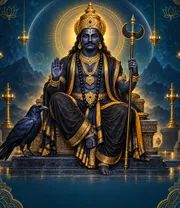
जय श्री शनिदेव रवि नन्दन।जय कृष्णो सौरी जगवन्दन॥
jaya śrī śanideva ravi nandana।jaya kṛṣṇo saurī jagavandana॥
Victory to Shri Shanidev, son of Ravi; victory, Krishna and Sauri, revered by the world.
- Chaupai 26 (Shani)
पिंगल मन्द रौद्र यम नामा।वप्र आदि कोणस्थ ललामा॥
piṃgala manda raudra yama nāmā।vapra ādi koṇastha lalāmā॥
Pingal, Manda, Raudra and Yama are your names; vapra and the rest — jewel who stands in the corner.
- Chaupai 27 (Shani)
वक्र दृष्टि पिप्पल तन साजा।क्षण महँ करत रंक क्षण राजा॥
vakra dṛṣṭi pippala tana sājā।kṣaṇa mahã karata raṃka kṣaṇa rājā॥
Your gaze falls slanting, your body dressed in pippala; in a moment you make a pauper, in a moment a king.
- Chaupai 28 (Shani)
ललत स्वर्ण पद करत निहाला।हरहु विपत्ति छाया के लाला॥
lalata svarṇa pada karata nihālā।harahu vipatti chāyā ke lālā॥
Your golden feet shine and bring gladness; take away calamity, O son of Chhaya.
- Chaupai 29 (Rahu)
जय जय राहु गगन प्रविसइया।तुमही चन्द्र आदित्य ग्रसइया॥
jaya jaya rāhu gagana pravisaiyā।tumahī candra āditya grasaiyā॥
Victory, victory to Rahu, who enters the sky; it is you who seize the moon and the sun.
- Chaupai 30 (Rahu)
रवि शशि अरि स्वर्भानु धारा।शिखी आदि बहु नाम तुम्हारा॥
ravi śaśi ari svarbhānu dhārā।śikhī ādi bahu nāma tumhārā॥
Foe of the sun and the moon, you bear Svarbhanu; Shikhi and many more are your names.
- Chaupai 31 (Rahu)
सैहिंकेय तुम निशाचर राजा।अर्धकाय जग राखहु लाजा॥
saihiṃkeya tuma niśācara rājā।ardhakāya jaga rākhahu lājā॥
You are Saimhikeya, king of those who walk by night; half-bodied one, keep the world's honour.
- Chaupai 32 (Rahu)
यदि ग्रह समय पाय कहिं आवहु।सदा शान्ति और सुख उपजावहु॥
yadi graha samaya pāya kahiṃ āvahu।sadā śānti aura sukha upajāvahu॥
If, planet, you come when your time arrives, bring forth peace and happiness always.
- Chaupai 33 (Ketu)
जय श्री केतु कठिन दुखहारी।करहु सुजन हित मंगलकारी॥
jaya śrī ketu kaṭhina dukhahārī।karahu sujana hita maṅgalakārī॥
Victory to Shri Ketu, remover of hard sorrow — work what is auspicious for the good.
- Chaupai 34 (Ketu)
ध्वजयुत रुण्ड रूप विकराला।घोर रौद्रतन अघमन काला॥
dhvajayuta ruṇḍa rūpa vikarālā।ghora raudratana aghamana kālā॥
Banner-bearing, a trunk without a head, your form is fearsome — a terrible, fierce body; aghamana kāla.
- Chaupai 35 (Ketu)
शिखी तारिका ग्रह बलवान।महा प्रताप न तेज ठिकाना॥
śikhī tārikā graha balavāna।mahā pratāpa na teja ṭhikānā॥
Shikhi, Tarika — mighty planet; there is no limit to your great majesty and splendour.
- Chaupai 36 (Ketu)
वाहन मीन महा शुभकारी।दीजै शान्ति दया उर धारी॥
vāhana mīna mahā śubhakārī।dījai śānti dayā ura dhārī॥
Your mount is a fish, most auspicious; hold compassion in your heart and grant peace.
- Closing dohas
- Doha 1 (closing)
धन्य नवग्रह देव प्रभु, महिमा अगम अपार।चित नव मंगल मोद गृह, जगत जनन सुखद्वार॥
dhanya navagraha deva prabhu, mahimā agama apāra।cita nava maṅgala moda gṛha, jagata janana sukhadvāra॥
Blessed are the Navagraha, lords and gods; their greatness is unreachable and without bound. Nine auspicious joys in the heart, a house of gladness — a door of happiness for the people of the world.
- Doha 2 (closing)
यह चालीसा नवोग्रह, विरचित सुन्दरदास।पढ़त प्रेम सुत बढ़त सुख, सर्वानन्द हुलास॥
yaha cālīsā navograha, viracita sundaradāsa।paḍhata prema suta baḍhata sukha, sarvānanda hulāsa॥
This Navagraha Chalisa was composed by Sundardas; read with love, happiness grows — joy and gladness in everything.
Overview
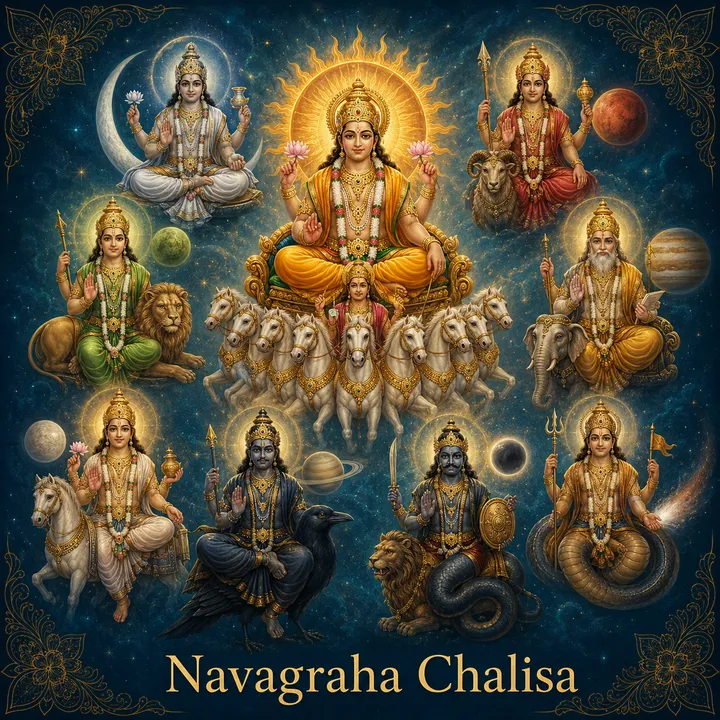
The Navagraha Chalisa is a Hindi devotional composition addressed not to a single deity but to all nine Navagraha together — the nine celestial influences central to Hindu astrology (Jyotisha): Surya (the sun), Chandra (the moon), Mangal (Mars), Budh (Mercury), Brihaspati (Jupiter), Shukra (Venus), Shani (Saturn), and the two lunar nodes, Rahu and Ketu. Rather than the sustained praise of one deity’s form and story found in most chalisas, this text moves through the nine grahas in a fixed order — Surya, then Chandra, Mangal, Budh, Brihaspati, Shukra, Shani, Rahu, and finally Ketu — giving each its own short stuti (praise) of two chaupai before moving to the next, then closing with a section on the benefit of reciting the whole composition for graha shanti (peace from planetary affliction).
Origin and source
The closing doha names its composer: “यह चालीसा नवोग्रह, विरचित सुन्दरदास” — “this Navagraha Chalisa was composed by Sundardas.” Beyond this signature, the text’s authorship is not otherwise well documented in the sources consulted for this page. Interestingly, the shanti-phal section just before that signature names the same trio of places — Prayag, the village of Kakra, and Durvasa’s ashram — that this site’s Ganesh Chalisa page also finds in its own closing verse, there attributed to a composer named Ramsundar (or Ram Sunder Prabhu Das). Whether “Sundardas” and “Ramsundar” reflect the same composer, a shared convention among devotional poets of one lineage, or simply a formula borrowed across the wider chalisa genre is not established here; this page notes the parallel without asserting an identity between the two names.
The text addresses each graha through a cluster of traditional epithets and mythic associations: Surya as Aditya, Divakara, and Bhaskara; Chandra as Soma and Rakesha; Shani through the epithets Pingala, Manda, Raudra, and Yama, drawn from the wider tradition of Shani’s many names; Rahu identified with Svarbhanu and described as the one who seizes the sun and moon during eclipses; and Ketu described with a banner and a decapitated form, riding a fish. The closing shanti-phal section situates the composition at Prayag, Kakra, and Durvasa’s ashram, and states that steady recitation frees the reciter from bodily hardship and leads to the highest good.
The English meanings printed with the verses were made for this page from the Devanagari above. Four published versions were compared line by line — Drik Panchang, Shubh Panchang, Bhakti Bharat and Aaj Tak — and none of them carries a gloss of its own. All four print the same text as this page, in the same order, and most of what separates them is spelling. Four variants touch a word. Two of the four print पूजहिं for पूजहु in Chaupai 16, which is an indicative where this page has an imperative — the English follows the imperative this page prints — and पाय हिं for पाय कहिं in Chaupai 32. One prints निरन्तर, “without pause,” in Chaupai 21 against निरन्तन in the other three and here; the English follows the sense of निरन्तर, since निरन्तन is not a word, and the Devanagari is left as the majority prints it. The fourth is the closing doha’s सुत / युत, below. Three words are left as they stand rather than guessed at: वप्र in the Shani couplet (Chaupai 26), पिप्पल in the next one, and अघमन in the Ketu couplet (Chaupai 34). The first two sit in a passage that versifies the ten names of the traditional Shani stotra — कोणस्थ, पिंगल, बभ्रु, कृष्ण, रौद्र, अन्तक, यम, सौरि, शनैश्वर, मन्द, closing “पिप्पलादेन संस्तुतः” — of which the chaupais carry eight; वप्र stands where that list has बभ्रु, and पिप्पल where it names the sage Pippalada. That is a parallel, not an emendation: all four printed versions read वप्र, and this page prints what they print. In the closing doha, three of the four print पढ़त प्रेम सुत and one prints युत — “joined with love,” which is what the line appears to want — so the English renders the rest of that line and leaves सुत out of it. In Chaupai 1, जनि is read as the Awadhi negative particle, giving “do not count me as one without protector” rather than “knowing me helpless.”
How it is recited
Unlike single-deity chalisas tied to one day of the week, the Navagraha Chalisa is recited to appeal to all nine grahas at once, most often as part of a Navagraha puja — offered, for instance, before a major undertaking, when a horoscope shows an afflicted planet, or during a difficult planetary period such as Shani’s Sade Sati. Its closing verses state that whoever recites it daily with a focused mind is freed from hardship and attains the highest good. This site does not assert that reciting this chalisa changes the outcome of anyone’s horoscope; it describes, without adopting, what this devotional and astrological tradition holds the text and the Navagraha to mean.
Frequently asked questions
How many verses does Navagraha Chalisa have?
Who is Navagraha Chalisa dedicated to?
When is Navagraha Chalisa typically recited?
What language is Navagraha Chalisa composed in?
What tradition is Navagraha Chalisa associated with?
Is an English translation of Navagraha Chalisa available?
Is there a Roman transliteration of Navagraha Chalisa?
Sourcing
Checked against independent sources before publishing — see our sourcing and editorial policy. Spotted an error? Report an issue .