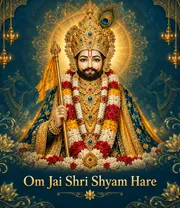
The text
Tap Recite along to follow verse by verse — use Next, or the arrow keys.
- Opening doha
- Doha (opening)
श्री गुरु चरण ध्यान धर, सुमिरि सच्चिदानन्द।श्याम चालीसा भणत हूँ, रच चौपाई छन्द॥
śrī guru caraṇa dhyāna dhara, sumiri saccidānanda।śyāma cālīsā bhaṇata hūṃ, raca caupāī chanda॥
Fixing my thought on the feet of the guru, remembering the Truth-Consciousness-Bliss — I compose this Shyam Chalisa, shaping it into chaupai verse.
- The 40 chaupais
- Chaupai 1
श्याम श्याम भजि बारम्बारा।सहज ही हो भवसागर पारा॥
śyāma śyāma bhaji bārambārā।sahaja hī ho bhavasāgara pārā॥
Chant Shyam, Shyam, again and again — and with ease you shall cross the ocean of worldly existence.
- Chaupai 2
इन सम देव न दूजा कोई।दीन दयालु न दाता होई॥
ina sama deva na dūjā koī।dīna dayālu na dātā hoī॥
There is no other god equal to him — none so compassionate to the humble, no other giver like him.
- Chaupai 3
भीमसुपुत्र अहिलवती जाया।कहीं भीम का पौत्र कहाया॥
bhīmasuputra ahilavatī jāyā।kahīṃ bhīma kā pautra kahāyā॥
Born to the son of Bhima and to Ahilavati, he is thus called the grandson of Bhima.
- Chaupai 4
यह सब कथा सही कल्पान्तर।तनिक न मानों इसमें अन्तर॥
yaha saba kathā sahī kalpāntara।tanika na mānoṃ isameṃ antara॥
All this story holds true across the ages — do not doubt for a moment that there is any difference in it.
- Chaupai 5
बर्बरीक विष्णु अवतारा।भक्तन हेतु मनुज तनु धारा॥
barbarīka viṣṇu avatārā।bhaktana hetu manuja tanu dhārā॥
Barbarik is an incarnation of Vishnu, who took on a human body for the sake of his devotees.
- Chaupai 6
वसुदेव देवकी प्यारे।यशुमति मैया नन्द दुलारे॥
vasudeva devakī pyāre।yaśumati maiyā nanda dulāre॥
Beloved of Vasudev and Devaki; darling of mother Yashoda and Nanda.
- Chaupai 7
मधुसूदन गोपाल मुरारी।बृजकिशोर गोवर्धन धारी॥
madhusūdana gopāla murārī।bṛjakiśora govardhana dhārī॥
Madhusudan, Gopal, Murari; the youth of Braj who lifted Mount Govardhan.
- Chaupai 8
सियाराम श्री हरि गोविन्दा।दीनपाल श्री बाल मुकुन्दा॥
siyārāma śrī hari govindā।dīnapāla śrī bāla mukundā॥
Sita-Ram, Shri Hari, Govinda; protector of the humble, the divine child Mukunda.
- Chaupai 9
दामोदर रणछोड़ बिहारी।नाथ द्वारिकाधीश खरारी॥
dāmodara raṇachoḍa bihārī।nātha dvārikādhīśa kharārī॥
Damodar, Ranchhod, the divine wanderer of Braj (Bihari); lord and master of Dwarka, slayer of the demon Khara.
- Chaupai 10
नरहरि रुप प्रहलाद प्यारा।खम्भ फारि हिरनाकुश मारा॥
narahari rupa prahalāda pyārā।khambha phāri hiranākuśa mārā॥
In the form of Narahari (the man-lion), beloved of Prahlad, he burst forth from the pillar and slew Hiranyakashipu.
- Chaupai 11
राधा वल्लभ रुक्मिणी कंता।गोपी वल्लभ कंस हनंता॥
rādhā vallabha rukmiṇī kantā।gopī vallabha kaṃsa hanantā॥
Beloved of Radha, husband of Rukmini; beloved of the gopis, slayer of Kansa.
- Chaupai 12
मनमोहन चित्तचोर कहाये।माखन चोरि चोरि कर खाये॥
manamohana cittacora kahāye।mākhana chori chori kara khāye॥
Called the enchanter of the mind, the stealer of hearts, who again and again stole butter and ate it.
- Chaupai 13
मुरलीधर यदुपति घनश्याम।कृष्ण पतितपावन अभिरामा॥
muralīdhara yadupati ghanaśyāma।kṛṣṇa patitapāvana abhirāmā॥
Bearer of the flute, lord of the Yadus, dark as a monsoon cloud; Krishna, purifier of the fallen, ever pleasing to behold.
- Chaupai 14
मायापति लक्ष्मीपति ईसा।पुरुषोत्तम केशव जगदीशा॥
māyāpati lakṣmīpati īsā।puruṣottama keśava jagadīśā॥
Lord of maya, lord of Lakshmi, the Supreme Being — Purushottam, Keshav, Lord of the universe.
- Chaupai 15
विश्वपति त्रिभुवन उजियारा।दीन बन्धु भक्तन रखवारा॥
viśvapati tribhuvana ujiyārā।dīna bandhu bhaktana rakhavārā॥
Lord of the universe, light of the three worlds; friend of the humble, protector of his devotees.
- Chaupai 16
प्रभु का भेद कोई न पाया।शेष महेश थके मुनिराया॥
prabhu kā bheda koī na pāyā।śeṣa maheśa thake munirāyā॥
No one has found the mystery of the Lord — even Shesha, Mahesh, and the great sages have grown weary trying.
- Chaupai 17
नारद शारद ऋषि योगिन्दर।श्याम श्याम सब रटत निरन्तर॥
nārada śārada ṛṣi yogindara।śyāma śyāma saba raṭata nirantara॥
Narada, Sharada, the sages, and the lords among yogis — all endlessly repeat, Shyam, Shyam.
- Chaupai 18
करि कोविद करि सके न गिनन्ता।नाम अपार अथाह अनन्ता॥
kari kovida kari sake na ginantā।nāma apāra athāha ananta॥
Even the wisest of scholars cannot count them — his names are boundless, unfathomable, endless.
- Chaupai 19
हर सृष्टि हर युग में भाई।ले अवतार भक्त सुखदाई॥
hara sṛṣṭi hara yuga meṃ bhāī।le avatāra bhakta sukhadāī॥
In every creation, in every age, O brother, he takes incarnation, bringing joy to his devotees.
- Chaupai 20
हृदय माँहि करि देखु विचारा।श्याम भजे तो हो निस्तारा॥
hṛdaya māṃhi kari dekhu vicārā।śyāma bhaje to ho nistārā॥
Look and reflect within your own heart — worship Shyam, and you shall find deliverance.
- Chaupai 21
कीर पढ़ावत गणिका तारी।भीलनी की भक्ति बलिहारी॥
kīra paḍhāvata gaṇikā tārī।bhīlanī kī bhakti balihārī॥
By teaching a parrot to recite the name, even a courtesan was carried across; a devotion worth all praise was shown by the tribal woman.
- Chaupai 22
सती अहिल्या गौतम नारी।भई श्राप वश शिला दुखारी॥
satī ahilyā gautama nārī।bhaī śrāpa vaśa śilā dukhārī॥
The chaste Ahilya, wife of sage Gautam, became, under a curse, a sorrowful stone.
- Chaupai 23
श्याम चरण रच नित लाई।पहुँची पतिलोक में जाई॥
śyāma caraṇa raca nita lāī।pahuṃcī patiloka meṃ jāī॥
She kept Shyam's feet ever within her, and so she reached the world of her husband.
- Chaupai 24
अजामिल अरू सदन कसाई।नाम प्रताप परम गति पाई॥
ajāmila arū sadana kasāī।nāma pratāpa parama gati pāī॥
Ajamil, and Sadhna the butcher — by the glory of the divine name, they attained the highest state.
- Chaupai 25
जाके श्याम नाम अधारा।सुख लहहि दुःख दूर हो सारा॥
jāke śyāma nāma adhārā।sukha lahahi duḥkha dūra ho sārā॥
Whoever has the name of Shyam as their support obtains happiness, and all sorrow is driven far away.
- Chaupai 26
श्याम सुलोचन है अति सुन्दर।मोर मुकुट सिर तन पीताम्बर॥
śyāma sulocana hai ati sundara।mora mukuṭa sira tana pītāmbara॥
Shyam, of beautiful eyes, is exceedingly handsome — a peacock-feather crown upon his head, and yellow garments upon his body.
- Chaupai 27
गल वैजयन्तिमाल सुहाई।छवि अनूप भक्तन मन भाई॥
gala vaijayantimāla suhāī।chavi anūpa bhaktana mana bhāī॥
The Vaijayanti garland graces his neck; his incomparable beauty delights the minds of his devotees.
- Chaupai 28
श्याम श्याम सुमिरहु दिनराती।शाम दुपहरि अरू परभाती॥
śyāma śyāma sumirahu dinarātī।śāma dupahari arū parabhātī॥
Remember Shyam, Shyam, day and night — in the evening, at noon, and at dawn.
- Chaupai 29
श्याम सारथी जिसके रथ के।रोड़े दूर होय उस पथ के॥
śyāma sārathī jisake ratha ke।roḍe dūra hoya usa patha ke॥
Whoever has Shyam as the charioteer of their chariot — every obstacle is cleared from their path.
- Chaupai 30
श्याम भक्त न कहीं पर हारा।भीर परि तब श्याम पुकारा॥
śyāma bhakta na kahīṃ para hārā।bhīra pari taba śyāma pukārā॥
A devotee of Shyam has never anywhere been defeated — when trouble falls upon them, they call out to Shyam.
- Chaupai 31
रसना श्याम नाम रस पी ले।जी ले श्याम नाम के हाले॥
rasanā śyāma nāma rasa pī le।jī le śyāma nāma ke hāle॥
O tongue, drink deep the nectar of Shyam's name — live your life immersed in the name of Shyam.
- Chaupai 32
संसारी सुख भोग मिलेगा।अन्त श्याम सुख योग मिलेगा॥
saṃsārī sukha bhoga milegā।anta śyāma sukha yoga milegā॥
Worldly happiness and enjoyment will be gained, and in the end, union with Shyam's bliss will be attained.
- Chaupai 33
श्याम प्रभु हैं तन के काले।मन के गोरे भोले भाले॥
śyāma prabhu haiṃ tana ke kāle।mana ke gore bhole bhāle॥
Lord Shyam is dark of body but fair of heart — simple and innocent within.
- Chaupai 34
श्याम संत भक्तन हितकारी।रोग दोष अघ नाशै भारी॥
śyāma santa bhaktana hitakārī।roga doṣa agha nāśai bhārī॥
Shyam is the well-wisher of saints and devotees; he destroys grave illness, fault, and sin.
- Chaupai 35
प्रेम सहित जे नाम पुकारा।भक्त लगत श्याम को प्यारा॥
prema sahita je nāma pukārā।bhakta lagata śyāma ko pyārā॥
Whoever calls his name with love — that devotee becomes dear to Shyam.
- Chaupai 36
खाटू में है मथुरा वासी।पार ब्रह्म पूरण अविनासी॥
khāṭū meṃ hai mathurā vāsī।pāra brahma pūraṇa avināsī॥
The dweller of Mathura resides at Khatu — the supreme, complete, and imperishable Brahman.
- Chaupai 37
सुधा तान भरि मुरली बजाई।चहुं दिशि नाना जहाँ सुनि पाई॥
sudhā tāna bhari muralī bajāī।cahuṃ diśi nānā jahāṃ suni pāī॥
He played his flute, filling it with nectar-sweet melody, heard reaching every direction, far and wide.
- Chaupai 38
वृद्ध बाल जेते नारी नर।मुग्ध भये सुनि वंशी के स्वर॥
vṛddha bāla jete nārī nara।mugdha bhaye suni vaṃśī ke svara॥
The old and the young, women and men alike, became enraptured on hearing the sound of the flute.
- Chaupai 39
दौड़ दौड़ पहुँचे सब जाई।खाटू में जहाँ श्याम कन्हाई॥
dauḍa dauḍa pahuṃce saba jāī।khāṭū meṃ jahāṃ śyāma kanhāī॥
Running, running, all of them arrived at Khatu, where Shyam Kanhaiya dwells.
- Chaupai 40
जिसने श्याम स्वरूप निहारा।भव भय से पाया छुटकारा॥
jisane śyāma svarūpa nihārā।bhava bhaya se pāyā chuṭakārā॥
Whoever beheld the true form of Shyam obtained release from the fear of worldly existence.
- Closing doha
- Doha (closing)
श्याम सलोने साँवरे, बर्बरीक तनु धार।इच्छा पूर्ण भक्त की, करो न लाओ बार॥
śyāma salone sāṃvare, barbarīka tanu dhāra।icchā pūrṇa bhakta kī, karo na lāo bāra॥
O lovely, dark Shyam, who took the body of Barbarik — fulfill the wish of your devotee, and delay no longer.
Overview
The Khatu Shyam Chalisa is a Hindi devotional composition of forty chaupai couplets, framed by an opening and a closing doha, addressed to Khatu Shyam Ji — the name under which the Mahabharata-era warrior Barbarik is worshipped at his temple in Khatu, Rajasthan. It opens with a brief account of Barbarik’s descent and the boon that gave him the name Shyam, moves through a long sequence of Krishna’s and Vishnu’s names and stories, and closes with verses on the benefit of reciting Shyam’s name and a picture of devotees streaming toward Khatu at the sound of his flute. Devotion to Khatu Shyam Ji has grown quickly in recent decades, and this chalisa is recited daily by many of his devotees alongside his aarti, Om Jai Shri Shyam Hare.
Origin and source
Khatu Shyam Ji is worshipped as Barbarik, son of Ghatotkacha and grandson of the Pandava Bhima — a warrior said, within the Mahabharata tradition, to have carried three arrows powerful enough to end the Kurukshetra war unaided. Before the war began, Krishna tested Barbarik’s resolve by appearing to him disguised as a Brahmin and asking for his head as an act of charity; Barbarik agreed, asking only to witness the battle in return, and Krishna set his severed head on a hill overlooking the field. In gratitude, Krishna granted Barbarik a boon: that in the Kali Yuga he would be worshipped under the name Shyam — one of Krishna’s own names — and would receive the devotion otherwise due to Krishna himself. His head is said to have later been found buried at Khatu, where the Khatu Shyam Ji temple now stands.
This chalisa reflects that boon directly. Alongside its opening verses on Barbarik’s own descent, most of its forty couplets praise Shyam through a long litany of Krishna’s and Vishnu’s names and stories — Madhusudan, Govinda, Damodar, the lord of Dwarka, the lifting of Govardhan, the slaying of Kansa, the Narahari and Ajamil legends among them — rather than through imagery specific to Barbarik alone. This is not a conflation of Khatu Shyam Ji with Krishna so much as the text enacting the boon itself: Barbarik is praised under, and through, the very name and glory that Krishna gave him. The chalisa circulates widely among Khatu Shyam Ji’s devotees without a clearly attested individual author.
How it is recited
The Khatu Shyam Chalisa is recited daily in the homes and satsangs of Khatu Shyam Ji’s devotees, and at his temple in Khatu, in the Sikar district of Rajasthan. Ekadashi — especially Shukla Paksha Ekadashi — is kept as a significant day for his worship, and the chalisa is also recited during the large Phalgun Mela held at Khatu each year, when crowds of pilgrims gather at the temple. It is commonly recited together with the aarti Om Jai Shri Shyam Hare as part of daily devotional practice, and, like that aarti, has spread well beyond Rajasthan as devotion to Khatu Shyam Ji has grown.
Frequently asked questions
How many verses does Khatu Shyam Chalisa have?
Who is Khatu Shyam Chalisa dedicated to?
When is Khatu Shyam Chalisa typically recited?
What language is Khatu Shyam Chalisa composed in?
What tradition is Khatu Shyam Chalisa associated with?
Is an English translation of Khatu Shyam Chalisa available?
Is there a Roman transliteration of Khatu Shyam Chalisa?
Sourcing
Checked against independent sources before publishing — see our sourcing and editorial policy. Spotted an error? Report an issue .