

The text
Tap Recite along to follow verse by verse — use Next, or the arrow keys.
- Opening dohas
- Doha 1 (opening)
सुवन केहरी जेवर, सुत महाबली रनधीर।बन्दौं सुत रानी बाछला, विपत निवारण वीर॥
suvana keharī jevara, suta mahābalī ranadhīra।bandauṃ suta rānī bāchalā, vipata nivāraṇa vīra॥
Lion-like son of Jevar, mighty and steadfast in battle — I bow to the son of Queen Bachhala, the hero who wards off calamity.
- Doha 2 (opening)
जय जय जय चौहान, वन्स गूगा वीर अनूप।अनंगपाल को जीतकर, आप बने सुर भूप॥
jaya jaya jaya cauhāna, vansa gūgā vīra anūpa।anaṅgapāla ko jītakara, āpa bane sura bhūpa॥
Victory, victory, victory to Googa Vir of the Chauhan line, without an equal; having defeated Anangpal, you became a king among the gods.
- The 53 chaupais
- Chaupai 1
जय जय जय जाहर रणधीरा।पर दुख भंजन बागड़ वीरा॥
jaya jaya jaya jāhara raṇadhīrā।para dukha bhañjana bāgaḍa vīrā॥
Victory, victory, victory to Jahar, steadfast in battle — breaker of others' sorrow, hero of Bagar.
- Chaupai 2
गुरु गोरख का है वरदानी।जाहरवीर जोधा लासानी॥
guru gorakha kā hai varadānī।jāharavīra jodhā lāsānī॥
He holds Guru Gorakh's boon; Jaharvir, a warrior without match.
- Chaupai 3
गौरवरण मुख महा विशाला।माथे मुकट घुंघराले बाला॥
gauravaraṇa mukha mahā viśālā।māthe mukaṭa ghuṅgharāle bālā॥
Fair of complexion, his face broad and great; a crown on his brow and curling hair.
- Chaupai 4
कांधे धनुष गले तुलसी माला।कमर कृपान रक्षा को डाला॥
kāndhe dhanuṣa gale tulasī mālā।kamara kṛpāna rakṣā ko ḍālā॥
A bow on his shoulder, a tulsi garland at his throat, a sword at his waist, girded for protection.
- Chaupai 5
जन्में गूगावीर जग जाना।ईसवी सन हजार दरमियाना॥
janmeṃ gūgāvīra jaga jānā।īsavī sana hajāra daramiyānā॥
Googavir was born, as the world knows, around the year one thousand of the Common Era.
- Chaupai 6
बल सागर गुण निधि कुमारा।दुखी जनों का बना सहारा॥
bala sāgara guṇa nidhi kumārā।dukhī janoṃ kā banā sahārā॥
An ocean of strength, a treasury of virtues — the prince became the support of the sorrowing.
- Chaupai 7
बागड़ पति बाछला नन्दन।जेवर सुत हरि भक्त निकन्दन॥
bāgaḍa pati bāchalā nandana।jevara suta hari bhakta nikandana॥
Lord of Bagar, Bachhala's delight; son of Jevar, a devotee of Hari and a destroyer of foes.
- Chaupai 8
जेवर राव का पुत्र कहाये।माता पिता के नाम बढ़ाये॥
jevara rāva kā putra kahāye।mātā pitā ke nāma baḍhāye॥
He was called the son of Jevar Rao, and raised the name of his mother and father.
- Chaupai 9
पूरन हुई कामना सारी।जिसने विनती करी तुम्हारी॥
pūrana huī kāmanā sārī।jisane vinatī karī tumhārī॥
Every desire was fulfilled for whoever made his plea to you.
- Chaupai 10
सन्त उबारे असुर संहारे।भक्त जनों के काज संवारे॥
santa ubāre asura saṃhāre।bhakta janoṃ ke kāja saṃvāre॥
He rescued the holy and destroyed demons, and set his devotees' affairs right.
- Chaupai 11
गूगावीर की अजब कहानी।जिसको ब्याही श्रीयल रानी॥
gūgāvīra kī ajaba kahānī।jisako byāhī śrīyala rānī॥
Googavir's story is a wonder — he who was wedded to Queen Shriyal.
- Chaupai 12
बाछल रानी जेवर राना।महादुःखी थे बिन सन्ताना॥
bāchala rānī jevara rānā।mahāduḥkhī the bina santānā॥
Queen Bachhal and Jevar Rana were in deep grief, having no child.
- Chaupai 13
भंगिन ने जब बोली मारी।जीवन हो गया उनको भारी॥
bhaṅgina ne jaba bolī mārī।jīvana ho gayā unako bhārī॥
When a sweeper-woman's taunt struck home, life became a burden to them.
- Chaupai 14
सूखा बाग पड़ा नौलक्खा।देख-देख जग का मन दुक्खा॥
sūkhā bāga paḍā naulakkhā।dekha-dekha jaga kā mana dukkhā॥
The Naulakkha garden lay withered; the world grieved to look on it.
- Chaupai 15
कुछ दिन पीछे साधू आये।चेला चेली संग में लाये॥
kucha dina pīche sādhū āye।celā celī saṅga meṃ lāye॥
Some days afterwards holy men came, bringing their disciples, men and women, with them.
- Chaupai 16
जेवर राव ने कुआ बनवाया।उद्घाटन जब करना चाहा॥
jevara rāva ne kuā banavāyā।udghāṭana jaba karanā cāhā॥
Jevar Rao had a well dug, and the time came to open it.
- Chaupai 17
खारी नीर कुए से निकला।राजा रानी का मन पिघला॥
khārī nīra kue se nikalā।rājā rānī kā mana pighalā॥
Salt water came out of the well, and the king's and the queen's hearts melted.
- Chaupai 18
रानी तब ज्योतिषी बुलवाया।कौन पाप मैं पुत्र न पाया॥
rānī taba jyotiṣī bulavāyā।kauna pāpa maiṃ putra na pāyā॥
The queen then had an astrologer called: "For what sin have I had no son?"
- Chaupai 19
कोई उपाय हमको बतलाओ।उन कहा गोरख गुरु मनाओ॥
koī upāya hamako batalāo।una kahā gorakha guru manāo॥
"Tell us some remedy." He said: "Win the favour of Guru Gorakh."
- Chaupai 20
गुरु गोरख जो खुश हो जाई।सन्तान पाना मुश्किल नाई॥
guru gorakha jo khuśa ho jāī।santāna pānā muśkila nāī॥
"If Guru Gorakh is pleased, a child is not hard to come by."
- Chaupai 21
बाछल रानी गोरख गुन गावे।नेम धर्म को न बिसरावे॥
bāchala rānī gorakha guna gāve।nema dharma ko na bisarāve॥
Queen Bachhal sang Gorakh's praises, and did not let her vows and duties slip.
- Chaupai 22
करे तपस्या दिन और राती।एक वक्त खाय रूखी चपाती॥
kare tapasyā dina aura rātī।eka vakta khāya rūkhī capātī॥
She performed austerity day and night, eating one dry chapati a day.
- Chaupai 23
कार्तिक माघ में करे स्नाना।व्रत इकादसी नहीं भुलाना॥
kārtika māgha meṃ kare snānā।vrata ikādasī nahīṃ bhulānā॥
She bathed in Kartik and in Magh, and never forgot the Ekadashi fast.
- Chaupai 24
पूरनमासी व्रत नहीं छोड़े।दान पुण्य से मुख नहीं मोड़े॥
pūranamāsī vrata nahīṃ choḍe।dāna puṇya se mukha nahīṃ moḍe॥
She did not give up the full-moon fast, nor turn her face from charity and merit.
- Chaupai 25
चेलों के संग गोरख आये।नौलखे में तम्बू तनवाये॥
celoṃ ke saṅga gorakha āye।naulakhe meṃ tambū tanavāye॥
Gorakh came with his disciples, and had tents pitched in the Naulakha garden.
- Chaupai 26
मीठा नीर कुए का कीना।सूखा बाग हरा कर दीना॥
mīṭhā nīra kue kā kīnā।sūkhā bāga harā kara dīnā॥
He made the well's water sweet, and turned the withered garden green.
- Chaupai 27
मेवा फल सब साधु खाए।अपने गुरु के गुन को गाये॥
mevā phala saba sādhu khāe।apane guru ke guna ko gāye॥
All the holy men ate the dried fruit, and sang the virtues of their guru.
- Chaupai 28
औघड़ भिक्षा मांगने आए।बाछल रानी ने दुख सुनाये॥
aughaḍa bhikṣā māṅgane āe।bāchala rānī ne dukha sunāye॥
The Aughar came asking alms, and Queen Bachhal told him her sorrow.
- Chaupai 29
औघड़ जान लियो मन माहीं।तप बल से कुछ मुश्किल नाहीं॥
aughaḍa jāna liyo mana māhīṃ।tapa bala se kucha muśkila nāhīṃ॥
The Aughar understood it in his heart: with the strength of austerity nothing is hard.
- Chaupai 30
रानी होवे मनसा पूरी।गुरु शरण है बहुत जरूरी॥
rānī hove manasā pūrī।guru śaraṇa hai bahuta jarūrī॥
"Queen, your wish shall be fulfilled; the guru's refuge is what is needed."
- Chaupai 31
बारह बरस जपा गुरु नामा।तब गोरख ने मन में जाना॥
bāraha barasa japā guru nāmā।taba gorakha ne mana meṃ jānā॥
For twelve years she repeated the guru's name; then Gorakh knew it in his heart.
- Chaupai 32
पुत्र देन की हामी भर ली।पूरनमासी निश्चय कर ली॥
putra dena kī hāmī bhara lī।pūranamāsī niścaya kara lī॥
He consented to grant a son, and fixed upon the full-moon day.
- Chaupai 33
काछल कपटिन गजब गुजारा।धोखा गुरु संग किया करारा॥
kāchala kapaṭina gajaba gujārā।dhokhā guru saṅga kiyā karārā॥
Kachhal the deceiver did an outrageous thing: she practised a bold deception on the guru.
- Chaupai 34
बाछल बनकर पुत्र पाया।बहन का दरद जरा नहीं आया॥
bāchala banakara putra pāyā।bahana kā darada jarā nahīṃ āyā॥
Passing herself off as Bachhal she obtained the son; for her sister she felt not the least pity.
- Chaupai 35
औघड़ गुरु को भेद बताया।तब बाछल ने गूगल पाया॥
aughaḍa guru ko bheda batāyā।taba bāchala ne gūgala pāyā॥
The Aughar guru was told of the trick; then Bachhal received the gugal.
- Chaupai 36
कर परसादी दिया गूगल दाना।अब तुम पुत्र जनो मरदाना॥
kara parasādī diyā gūgala dānā।aba tuma putra jano maradānā॥
He gave the grain of gugal as prasad: "Now bear a manly son."
- Chaupai 37
लीली घोड़ी और पण्डतानी।लूना दासी ने भी जानी॥
līlī ghoḍī aura paṇḍatānī।lūnā dāsī ne bhī jānī॥
The blue-grey mare and the pandit's wife, and the maidservant Luna too, came to know of it.
- Chaupai 38
रानी गूगल बाट के खाई।सब बांझों को मिली दवाई॥
rānī gūgala bāṭa ke khāī।saba bāñjhoṃ ko milī davāī॥
The queen divided the gugal and ate it; so every barren woman got the medicine.
- Chaupai 39
नरसिंह पंडित लीला घोड़ा।भज्जु कुतवाल जना रणधीरा॥
narasiṃha paṇḍita līlā ghoḍā।bhajju kutavāla janā raṇadhīrā॥
Narsingh the pandit, Lila the horse, Bhajju the kotwal — all were born, steadfast in battle.
- Chaupai 40
रूप विकट धर सब ही डरावे।जाहरवीर के मन को भावे॥
rūpa vikaṭa dhara saba hī ḍarāve।jāharavīra ke mana ko bhāve॥
Taking fearsome forms they frightened everyone, and pleased Jaharvir's heart.
- Chaupai 41
भादों कृष्ण जब नौमी आई।जेवरराव के बजी बधाई॥
bhādoṃ kṛṣṇa jaba naumī āī।jevararāva ke bajī badhāī॥
When the ninth of the dark fortnight of Bhadon came, songs of congratulation sounded for Jevar Rao.
- Chaupai 42
विवाह हुआ गूगा भये राना।संगलदीप में बने मेहमाना॥
vivāha huā gūgā bhaye rānā।saṅgaladīpa meṃ bane mehamānā॥
The marriage took place and Googa became king; in Sangaldip he was made a guest.
- Chaupai 43
रानी श्रीयल संग परे फेरे।जाहर राज बागड़ का करे॥
rānī śrīyala saṅga pare phere।jāhara rāja bāgaḍa kā kare॥
He took the marriage rounds with Queen Shriyal, and Jahar ruled over Bagar.
- Chaupai 44
अरजन सरजन काछल जने।गूगा वीर से रहे वे तने॥
arajana sarajana kāchala jane।gūgā vīra se rahe ve tane॥
Kachhal bore Arjan and Sarjan, and they stayed at odds with Googa Vir.
- Chaupai 45
दिल्ली गए लड़ने के काजा।अनंग पाल चढ़े महाराजा॥
dillī gae laḍane ke kājā।anaṅga pāla caḍhe mahārājā॥
They went to Delhi to make war; the great king Anangpal marched out.
- Chaupai 46
उसने घेरी बागड़ सारी।जाहरवीर न हिम्मत हारी॥
usane gherī bāgaḍa sārī।jāharavīra na himmata hārī॥
He laid siege to the whole of Bagar; Jaharvir did not lose heart.
- Chaupai 47
अरजन सरजन जान से मारे।अनंगपाल ने शस्त्र डारे॥
arajana sarajana jāna se māre।anaṅgapāla ne śastra ḍāre॥
He killed Arjan and Sarjan outright, and Anangpal laid down his arms.
- Chaupai 48
चरण पकड़कर पिण्ड छुड़ाया।सिंह भवन माड़ी बनवाया॥
caraṇa pakaḍakara piṇḍa chuḍāyā।siṃha bhavana māḍī banavāyā॥
Clasping his feet he saved his life, and had the maṛī — the shrine — built at Singh Bhavan.
- Chaupai 49
उसीमें गूगावीर समाये।गोरख टीला धूनी रमाये॥
usīmeṃ gūgāvīra samāye।gorakha ṭīlā dhūnī ramāye॥
In that very place Googavir was absorbed, and at Gorakh Tila the sacred fire was lit.
- Chaupai 50
पुण्य वान सेवक वहाँ आये।तन मन धन से सेवा लाए॥
puṇya vāna sevaka vahā̃ āye।tana mana dhana se sevā lāe॥
Servants of merit came there, and brought their service with body, mind and wealth.
- Chaupai 51
मनसा पूरी उनकी होई।गूगावीर को सुमरे जोई॥
manasā pūrī unakī hoī।gūgāvīra ko sumare joī॥
Whoever remembers Googavir has his wish fulfilled.
- Chaupai 52
चालीस दिन पढ़े जाहर चालीसा।सारे कष्ट हरे जगदीसा॥
cālīsa dina paḍhe jāhara cālīsā।sāre kaṣṭa hare jagadīsā॥
Whoever reads the Jahar Chalisa for forty days — the Lord of the world takes all his suffering away.
- Chaupai 53
दूध पूत उन्हें दे विधाता।कृपा करे गुरु गोरखनाथ॥
dūdha pūta unheṃ de vidhātā।kṛpā kare guru gorakhanātha॥
The Creator grants them milk and sons, and Guru Gorakhnath shows them grace.
Overview
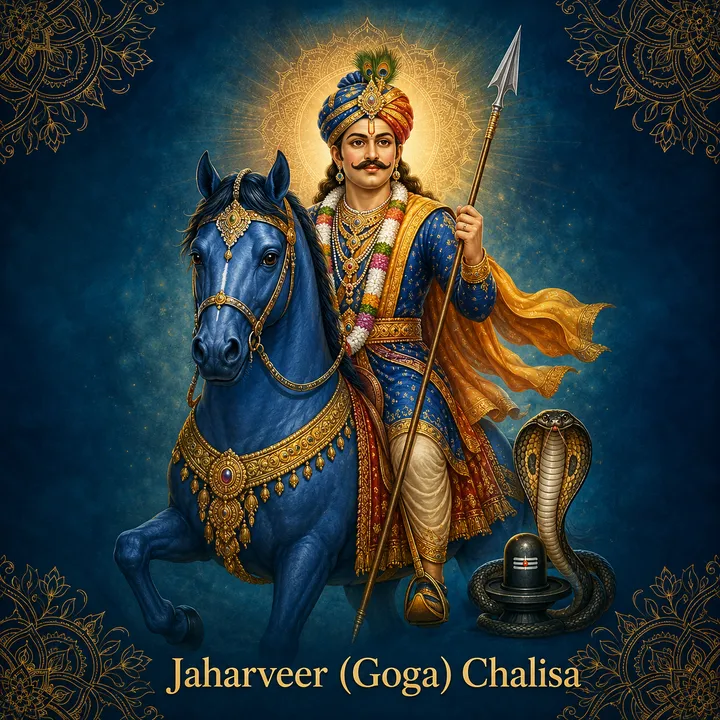
Goga Ji — also called Jaharveer Goga, Goga Peer, or Jahar Peer — is a folk hero-deity venerated across Rajasthan and Haryana, worshipped above all as a protector against snakebite. His principal shrine, Gogamedi in Rajasthan, and other shrines dedicated to him draw devotees from Hindu communities and, in parts of the region, from Muslim communities as well, who know him as Guga Peer — one of several folk-devotional figures in North India whose veneration crosses religious lines. The Jaharveer Chalisa is a Hindi devotional composition of two opening dohas and fifty-three chaupai couplets recounting his birth, his deeds, and his enshrinement, recited by his devotees much as chalisas are recited for other deities.
Origin and source
No author is named within the text of the Jaharveer Chalisa itself, unlike some other chalisas that identify their composer in a closing verse; this page treats it as an anonymous composition within the oral and print tradition surrounding Goga Ji’s worship. The chalisa places his birth, in its own words, “around the year one thousand of the Common Era,” into the Chauhan Rajput lineage — the long-awaited son born to Bachhal Rani and King Jewar Rao of Bagad after the intervention of the Nath yogi Guru Gorakhnath. It goes on to recount his marriage to Rani Shriyal, a conflict with a ruler named Anangpal of Delhi in defense of his kingdom of Bagad, and his eventual enshrinement, before closing with the benefit said to come from reciting the chalisa. The precise historical dating, and the identity of the “Anangpal” named in the text, belong to the legendary tradition surrounding Goga Ji rather than to settled history, and this page does not attempt to adjudicate between them.
This page carried the Devanagari without English meanings until October 2026, on the view that a dialect-dense folk text was better left unglossed than glossed inaccurately. The meanings printed with the verses now were made for this page from the Devanagari above. Only one published version carrying the full text was found. Compared verse by verse it prints all fifty-five in the same order and, every one of them, in the same words as this page; it carries no gloss of its own, so the rendering here is this page’s own and rests on a single point of comparison.
Two places are worth naming. Chaupai 7 as printed reads जेवर सुत हरि भक्त निकन्दन, which word for word would make Goga Ji the destroyer of Hari’s devotees — the opposite of everything around it. The English takes निकन्दन as applying to their enemies, which is how the genre uses the word, and the line is left standing as it is printed rather than emended. In Chaupai 48, माड़ी is the Rajasthani word for a small shrine and is rendered as that. The narrative the chaupais tell — the twin sisters Bachhal and Kachhal, the guggul given as prasad and divided so that a mare, a pandit’s wife and a maidservant bore sons alongside the queen — is the tradition’s own account and is rendered as the verses give it, without being weighed against the historical record; the note above on dating applies to all of it.
How it is recited
The Jaharveer Chalisa is recited by devotees of Goga Ji, particularly around Goga Navami, observed in the Hindu month of Bhadrapada and marked especially in Rajasthan and Haryana. Devotees may recite it at home or at one of Goga Ji’s shrines, seeking his protection from snakebite and other danger, as an act of devotion alongside — not in place of — medical care. The chalisa’s own closing verses describe reciting it over a period of days as part of this devotional practice.
Frequently asked questions
How many verses does Jaharveer (Goga) Chalisa have?
Who is Jaharveer (Goga) Chalisa dedicated to?
When is Jaharveer (Goga) Chalisa typically recited?
What language is Jaharveer (Goga) Chalisa composed in?
What tradition is Jaharveer (Goga) Chalisa associated with?
Is an English translation of Jaharveer (Goga) Chalisa available?
Is there a Roman transliteration of Jaharveer (Goga) Chalisa?
Sourcing
Checked against independent sources before publishing — see our sourcing and editorial policy. Spotted an error? Report an issue .

