The text
Tap Recite along to follow verse by verse — use Next, or the arrow keys.
- Stanza 1 (refrain)
ॐ जय श्री श्याम हरे, बाबा जय श्री श्याम हरे॥
oṃ jaya śrī śyāma hare, bābā jaya śrī śyāma hare॥
Om, victory to glorious Shyam Hare — Baba, victory to glorious Shyam Hare.
- Stanza 2
खाटू धाम विराजत, अनुपम रूप धरे॥ॐ जय श्री श्याम हरे, बाबा जय श्री श्याम हरे॥
khāṭū dhāma virājata, anupama rūpa dhare॥oṃ jaya śrī śyāma hare, bābā jaya śrī śyāma hare॥
You reside in Khatu Dham, bearing a form beyond compare. Om, victory to glorious Shyam Hare — Baba, victory to glorious Shyam Hare.
- Stanza 3
रतन जड़ित सिंहासन, सिर पर चंवर ढुरे।तन केसरिया बागो, कुण्डल श्रवण पड़े॥ॐ जय श्री श्याम हरे, बाबा जय श्री श्याम हरे॥
ratana jaḍita siṃhāsana, sira para caṃvara ḍhure।tana kesariyā bāgo, kuṇḍala śravaṇa paḍe॥oṃ jaya śrī śyāma hare, bābā jaya śrī śyāma hare॥
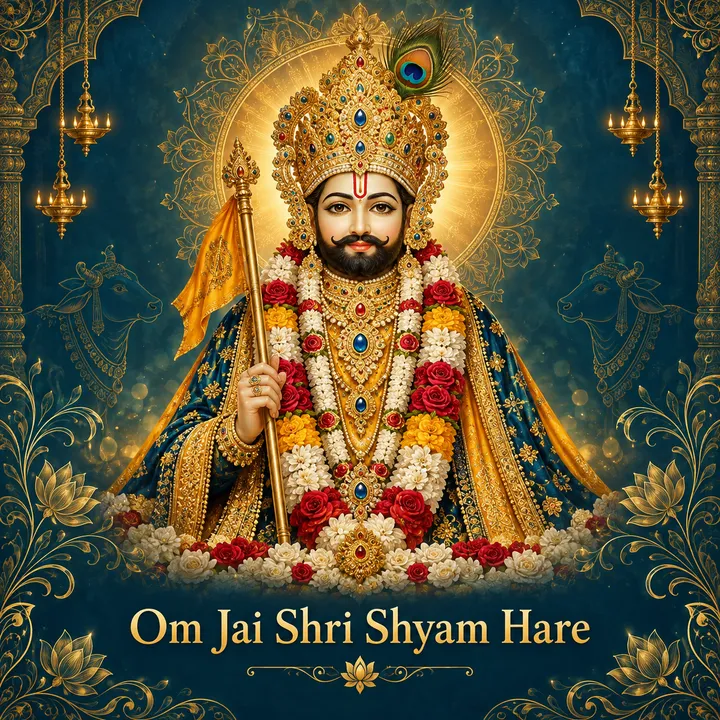
A jewel-studded throne, and a fly-whisk waved over your head; a saffron robe adorns your body, earrings rest upon your ears. Om, victory to glorious Shyam Hare — Baba, victory to glorious Shyam Hare.
- Stanza 4
गल पुष्पों की माला, सिर पर मुकुट धरे।खेवत धूप अग्नि पर, दीपक ज्योति जले॥ॐ जय श्री श्याम हरे, बाबा जय श्री श्याम हरे॥
gala puṣpoṃ kī mālā, sira para mukuṭa dhare।khevata dhūpa agni para, dīpaka jyoti jale॥oṃ jaya śrī śyāma hare, bābā jaya śrī śyāma hare॥
A garland of flowers graces your neck, a crown sits upon your head; incense burns before you, and the lamp's flame glows. Om, victory to glorious Shyam Hare — Baba, victory to glorious Shyam Hare.
- Stanza 5
मोदक खीर चूरमा, सुवरण थाल भरे।सेवक भोग लगावत, सेवा नित्य करे॥ॐ जय श्री श्याम हरे, बाबा जय श्री श्याम हरे॥
modaka khīra cūramā, suvaraṇa thāla bhare।sevaka bhoga lagāvata, sevā nitya kare॥oṃ jaya śrī śyāma hare, bābā jaya śrī śyāma hare॥
Sweets, kheer, and churma fill the golden plate; your servants offer this feast, tending to you in daily service. Om, victory to glorious Shyam Hare — Baba, victory to glorious Shyam Hare.
- Stanza 6
झांझ कटोरा और घडियावल, शंख मृदंग घुरे।भक्त आरती गावे, जय-जयकार करे॥ॐ जय श्री श्याम हरे, बाबा जय श्री श्याम हरे॥
jhāṃjha kaṭorā aura ghaḍiyāvala, śaṅkha mṛdaṅga ghure।bhakta āratī gāve, jaya-jayakāra kare॥oṃ jaya śrī śyāma hare, bābā jaya śrī śyāma hare॥
Cymbals, bowls, and small gongs sound, the conch and mridangam resound; devotees sing the aarti, calling out in celebration. Om, victory to glorious Shyam Hare — Baba, victory to glorious Shyam Hare.
- Stanza 7
जो ध्यावे फल पावे, सब दुःख से उबरे।सेवक जन निज मुख से, श्री श्याम-श्याम उचरे॥ॐ जय श्री श्याम हरे, बाबा जय श्री श्याम हरे॥
jo dhyāve phala pāve, saba duḥkha se ubare।sevaka jana nija mukha se, śrī śyāma-śyāma ucare॥oṃ jaya śrī śyāma hare, bābā jaya śrī śyāma hare॥
Whoever meditates on you receives the fruit of devotion and is freed from every sorrow; your servants, with their own lips, chant only Shyam, Shyam. Om, victory to glorious Shyam Hare — Baba, victory to glorious Shyam Hare.
- Stanza 8
श्री श्याम बिहारी जी की आरती, जो कोई नर गावे।कहत भक्त-जन, मनवांछित फल पावे॥ॐ जय श्री श्याम हरे, बाबा जय श्री श्याम हरे॥
śrī śyāma bihārī jī kī āratī, jo koī nara gāve।kahata bhakta-jana, manavāṃchita phala pāve॥oṃ jaya śrī śyāma hare, bābā jaya śrī śyāma hare॥
Whoever sings this aarti of Shri Shyam Bihari, the devotees say, receives the fruit their heart desires. Om, victory to glorious Shyam Hare — Baba, victory to glorious Shyam Hare.
- Stanza 9
जय श्री श्याम हरे, बाबा जी श्री श्याम हरे।निज भक्तों के तुमने, पूरण काज करे॥ॐ जय श्री श्याम हरे, बाबा जय श्री श्याम हरे॥
jaya śrī śyāma hare, bābā jī śrī śyāma hare।nija bhaktoṃ ke tumane, pūraṇa kāja kare॥oṃ jaya śrī śyāma hare, bābā jaya śrī śyāma hare॥
Victory to Shyam Hare, victory to Baba Shyam Hare; you have fulfilled every task for your own devotees. Om, victory to glorious Shyam Hare — Baba, victory to glorious Shyam Hare.
Overview
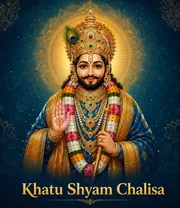
Om Jai Shri Shyam Hare is a Hindi aarti addressed to Khatu Shyam Ji, the form of the Mahabharata warrior Barbarik worshipped at Khatu, a temple town in the Sikar district of Rajasthan. The aarti opens with the refrain that gives it its name and moves through nine stanzas — the refrain itself, followed by eight couplets — describing his jewel-studded throne, saffron robe and ornaments, and the incense, lamps, and food offerings brought to him in worship, closing with the belief that whoever sings it with devotion receives what they seek. Devotion to Khatu Shyam Ji has grown rapidly in recent decades, spreading through Rajasthani communities to shrines and gatherings well beyond Rajasthan.
Origin and source
The name Shyam in this aarti refers to Khatu Shyam Ji, not to Krishna directly, though the two are connected by a specific boon within the Mahabharata tradition. Barbarik was the son of Ghatotkacha and grandson of the Pandava Bhima, a warrior said to carry three arrows powerful enough to decide the outcome of the Kurukshetra war on their own. Before the war began, Krishna — testing Barbarik’s resolve — appeared to him disguised as a Brahmin and asked for his head as an act of charity; Barbarik agreed, asking only to witness the battle in return, and Krishna set his severed head on a hill overlooking the battlefield. In gratitude for this sacrifice, Krishna granted Barbarik a boon: that in the Kali Yuga he would be worshipped under the name Shyam and would receive the devotion due to Krishna himself. His head is said to have later been found buried at Khatu, where the Khatu Shyam Ji temple now stands. This aarti circulates widely in devotional collections without a clearly attested individual author.
How it is recited
Om Jai Shri Shyam Hare is sung as the evening aarti at the Khatu Shyam Ji temple in Khatu, Rajasthan, and in the homes and satsangs of his devotees, usually with a lit lamp or camphor flame circled before his image as the refrain is repeated after each stanza. Shukla Paksha Ekadashi, the eleventh day of the waxing moon, is kept as a particularly important day for his worship, and the aarti is also sung at the large melas held at Khatu through the year. Devotion to Khatu Shyam Ji has expanded well beyond Rajasthan in recent decades, and this aarti is now sung at Shyam temples and gatherings across India and in the diaspora.
Frequently asked questions
How many verses does Om Jai Shri Shyam Hare have?
Who is Om Jai Shri Shyam Hare dedicated to?
When is Om Jai Shri Shyam Hare typically recited?
What language is Om Jai Shri Shyam Hare composed in?
What tradition is Om Jai Shri Shyam Hare associated with?
Is an English translation of Om Jai Shri Shyam Hare available?
Is there a Roman transliteration of Om Jai Shri Shyam Hare?
Sourcing
Checked against independent sources before publishing — see our sourcing and editorial policy. Spotted an error? Report an issue .