The text
Tap Recite along to follow verse by verse — use Next, or the arrow keys.
- Opening dohas
- Doha (opening) 1
जय ब्रह्मा जय स्वयम्भू, चतुरानन सुखमूल।करहु कृपा निज दास पै, रहहु सदा अनुकूल॥
jaya brahmā jaya svayambhū, caturānana sukhamūla।karahu kṛpā nija dāsa pai, rahahu sadā anukūla॥
Victory to Brahma, victory to the self-born, four-faced source of all happiness — show grace upon this humble servant, and remain ever favorable toward me.
- Doha (opening) 2
तुम सृजक ब्रह्माण्ड के, अज विधि घाता नाम।विश्वविधाता कीजिये, जन पै कृपा ललाम॥
tuma sṛjaka brahmāṇḍa ke, aja vidhi ghātā nāma।viśvavidhātā kījiye, jana pai kṛpā lalāma॥
You are the creator of the universe, known by the names Aja, Vidhi, and Ghata — the Unborn, the Ordainer, the Maker. O ordainer of the whole world, bestow your gracious favor upon this devotee.
- The 53 chaupais
- Chaupai 1
जय जय कमलासन जगमूला।रहहु सदा जनपै अनुकूला॥
jaya jaya kamalāsana jagamūlā।rahahu sadā janapai anukūlā॥
Victory, victory to the one seated on the lotus, the root of the world — remain ever favorable toward your people.
- Chaupai 2
रूप चतुर्भुज परम सुहावन।तुम्हें अहैं चतुर्दिक आनन॥
rūpa caturbhuja parama suhāvana।tumheṃ ahaiṃ caturdika ānana॥
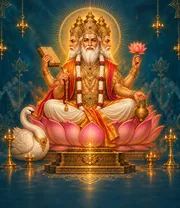
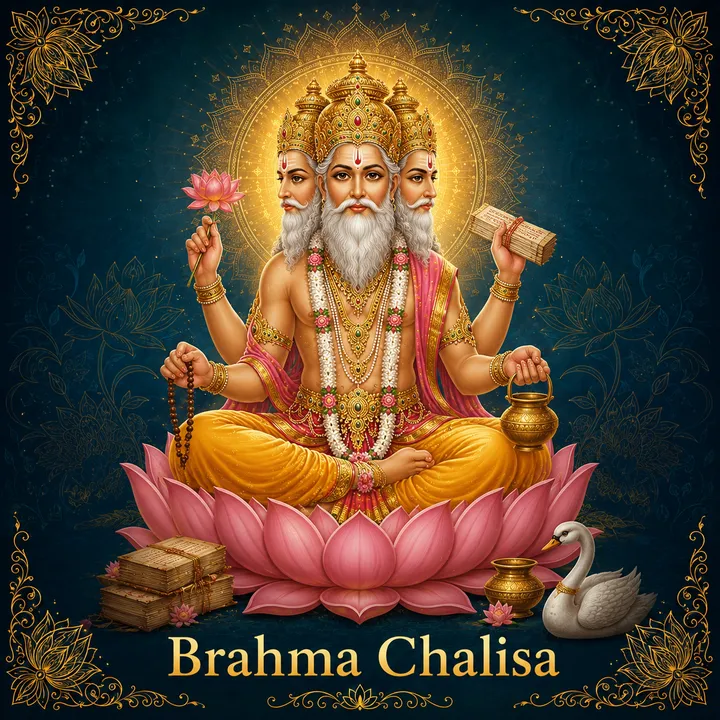
Your form bears four arms, supremely pleasing to behold, and you have faces looking out in all four directions.
- Chaupai 3
रक्तवर्ण तव सुभग शरीरा।मस्तक जटाजूट गंभीरा॥
raktavarṇa tava subhaga śarīrā।mastaka jaṭājūṭa gaṃbhīrā॥
Your handsome body is red in hue, and upon your head rests a solemn crown of matted locks.
- Chaupai 4
ताके ऊपर मुकुट बिराजै।दाढ़ी श्वेत महाछवि छाजै॥
tāke ūpara mukuṭa birājai।dāḍhī śveta mahāchavi chājai॥
Above that sits a crown, and a white beard adorns you with great splendor.
- Chaupai 5
श्वेतवस्त्र धारे तुम सुन्दर।है यज्ञोपवीत अति मनहर॥
śvetavastra dhāre tuma sundara।hai yajñopavīta ati manahara॥
You wear beautiful white garments, and a sacred thread of great charm.
- Chaupai 6
कानन कुण्डल सुभग बिराजहिं।गल मोतिन की माला राजहिं॥
kānana kuṇḍala subhaga birājahiṃ।gala motina kī mālā rājahiṃ॥
Lovely earrings adorn your ears, and a garland of pearls shines about your neck.
- Chaupai 7
चारिहु वेद तुम्हीं प्रगटाये।दिव्य ज्ञान त्रिभुवनहिं सिखाये॥
cārihu veda tumhīṃ pragaṭāye।divya jñāna tribhuvanahiṃ sikhāye॥
You alone brought forth all four Vedas, and taught divine knowledge to the three worlds.
- Chaupai 8
ब्रह्मलोक शुभ धाम तुम्हारा।अखिल भुवन महँ यश बिस्तारा॥
brahmaloka śubha dhāma tumhārā।akhila bhuvana maham̐ yaśa bistārā॥
Brahmaloka is your auspicious abode; your fame has spread throughout every world.
- Chaupai 9
अर्धांगिनि तव है सावित्री।अपर नाम हिये गायत्री॥
ardhāṃgini tava hai sāvitrī।apara nāma hiye gāyatrī॥
Savitri is your consort — Gayatri, held dear in the heart, is her other name.
- Chaupai 10
सरस्वती तब सुता मनोहर।वीणा वादिनी सब विधि सुन्दर॥
sarasvatī taba sutā manohara।vīṇā vādinī saba vidhi sundara॥
Saraswati is your captivating daughter, the veena-player, lovely in every way.
- Chaupai 11
कमलासन पर रहे बिराजे।तुम हरि भक्ति साज सब साजे॥
kamalāsana para rahe birāje।tuma hari bhakti sāja saba sāje॥
You remain seated upon the lotus, adorned throughout with devotion to Hari.
- Chaupai 12
क्षीर सिन्धु सोवत सुरभूपा।नाभि कमल भो प्रगट अनूपा॥
kṣīra sindhu sovata surabhūpā।nābhi kamala bho pragaṭa anūpā॥
As the lord of the gods lay sleeping upon the ocean of milk, an unparalleled lotus appeared, manifest from his navel.
- Chaupai 13
तेहि पर तुम आसीन कृपाला।सदा करहु सन्तन प्रतिपाला॥
tehi para tuma āsīna kṛpālā।sadā karahu santana pratipālā॥
Upon that lotus you sit enthroned, O gracious one, ever sustaining the saints.
- Chaupai 14
एक बार की कथा प्रचारी।तुम कह मोह भयेउ मन भारी॥
eka bāra kī kathā pracārī।tuma kaha moha bhayeu mana bhārī॥
There is told a story of one such time, when a heavy delusion arose within your mind.
- Chaupai 15
कमलासन लखि कीन्ह बिचारा।और न कोउ अहै संसारा॥
kamalāsana lakhi kīnha bicārā।aura na kou ahai saṃsārā॥
Seeing only the lotus-seat, you thought to yourself that there existed no one else in the world.
- Chaupai 16
तब तुम कमलनाल गहि लीन्हा।अन्त बिलोकन कर प्रण कीन्हा॥
taba tuma kamalanāla gahi līnhā।anta bilokana kara praṇa kīnhā॥
Then you took hold of the lotus stalk, and vowed to find its very end.
- Chaupai 17
कोटिक वर्ष गये यहि भांति।भ्रमत भ्रमत बीते दिन राती॥
koṭika varṣa gaye yahi bhāṃti।bhramata bhramata bīte dina rātī॥
In this way millions of years passed, and days and nights slipped by as you wandered on and on.
- Chaupai 18
पै तुम ताकर अन्य न पाये।हरै निराश अतिशय दुःखियाये॥
pai tuma tākara anya na pāye।harai nirāśa atiśaya duḥkhiyāye॥
Yet you found nothing else there, and became utterly disheartened and sorrowful.
- Chaupai 19
पुनि बिचार मन महँ यह कीन्हा।महापद्म यह अति प्राचीना॥
puni bicāra mana maham̐ yaha kīnhā।mahāpadma yaha ati prācīnā॥
Then this thought arose again in your mind: this great lotus is exceedingly ancient.
- Chaupai 20
याको जन्म भयो को कारन।तबहीं मोहि करयो यह धारन॥
yāko janma bhayo ko kārana।tabahīṃ mohi karayo yaha dhārana॥
What was the cause of its birth? It was at that very moment that I came to hold this form.
- Chaupai 21
अखिल भुवन महँ कहँ कोइ नाहीं।सब कछु अहै निहित मो माहीं॥
akhila bhuvana maham̐ kaham̐ koi nāhīṃ।saba kachu ahai nihita mo māhīṃ॥
In all the worlds there exists no one else — everything is contained within me alone.
- Chaupai 22
यह निश्चय करि गरब बढ़ायो।निज कहँ ब्रह्म मानि सुखपाये॥
yaha niścaya kari garaba baḍhāyo।nija kaham̐ brahma māni sukhapāye॥
Having settled on this conviction, your pride swelled, and you took pleasure in believing yourself to be Brahman itself.
- Chaupai 23
गगन गिरा तब भई गंभीरा।ब्रह्मा वचन सुनहु धरि धीरा॥
gagana girā taba bhaī gaṃbhīrā।brahmā vacana sunahu dhari dhīrā॥
Then a deep voice arose from the sky: O Brahma, listen to these words, and hold yourself steady.
- Chaupai 24
सकल सृष्टि कर स्वामी जोई।ब्रह्म अनादि अलख है सोई॥
sakala sṛṣṭi kara svāmī joī।brahma anādi alakha hai soī॥
The one who is lord of all creation — that alone is Brahman, beginningless and unseen.
- Chaupai 25
निज इच्छा उन सब निरमाये।ब्रह्मा विष्णु महेश बनाये॥
nija icchā una saba niramāye।brahmā viṣṇu maheśa banāye॥
By his own will he fashioned all things, and made Brahma, Vishnu, and Mahesh.
- Chaupai 26
सृष्टि लागि प्रगटे त्रयदेवा।सब जग इनकी करिहै सेवा॥
sṛṣṭi lāgi pragaṭe trayadevā।saba jaga inakī karihai sevā॥
For the sake of creation these three gods appeared, and the whole world shall render them service.
- Chaupai 27
महापद्म जो तुम्हरो आसन।ता पै अहै विष्णु को शासन॥
mahāpadma jo tumharo āsana।tā pai ahai viṣṇu ko śāsana॥
The great lotus that is your very seat — over it rests the authority of Vishnu.
- Chaupai 28
विष्णु नाभितें प्रगटयो आई।तुम कहँ सत्य दीन्ह समुझाई॥
viṣṇu nābhiteṃ pragaṭayo āī।tuma kaham̐ satya dīnha samujhāī॥
It appeared, having emerged from Vishnu's own navel — so saying, the voice made the truth known to you.
- Chaupai 29
भैटहु जाइ विष्णु जी हितमानी।यह कहि बन्द भई नभवानी॥
bhaiṭahu jāi viṣṇu jī hitamānī।yaha kahi banda bhaī nabhavānī॥
Go and meet Vishnu, for your own good — saying this, the voice from the sky fell silent.
- Chaupai 30
ताहि श्रवण कहि अचरज माना।पुनि चतुरानन कीन्ह पयाना॥
tāhi śravaṇa kahi acaraja mānā।puni caturānana kīnha payānā॥
Hearing this, you were struck with wonder, and the four-faced one then set out on the journey.
- Chaupai 31
कमल नाल धरि नीचे आवा।तहां विष्णु के दर्शन पावा॥
kamala nāla dhari nīce āvā।tahāṃ viṣṇu ke darśana pāvā॥
Following the lotus stalk downward, you came at last to behold Vishnu there.
- Chaupai 32
शयन करत देखे सुरभूपा।श्यामवर्ण तनु परम अनूपा॥
śayana karata dekhe surabhūpā।śyāmavarṇa tanu parama anūpā॥
You saw the lord of the gods lying at rest, his form dark-hued and beyond all compare.
- Chaupai 33
सोहत चतुर्भुजा अतिसुन्दर।क्रीटमुकट राजत मस्तक पर॥
sohata caturbhujā atisundara।krīṭamukaṭa rājata mastaka para॥
Four-armed and exceedingly beautiful, a jeweled crown shone upon his head.
- Chaupai 34
गल बैजन्ती माल बिराजै।कोटि सूर्य की शोभा लाजै॥
gala baijantī māla birājai।koṭi sūrya kī śobhā lājai॥
A Vaijayanti garland adorned his neck, its splendor putting even a million suns to shame.
- Chaupai 35
शंख चक्र अरु गदा मनोहर।पद्म सहित आयुध सब सुन्दर॥
śaṃkha cakra aru gadā manohara।padma sahita āyudha saba sundara॥
The conch, discus, and mace were captivating, and every weapon, the lotus among them, was beautiful.
- Chaupai 36
पायँ पलोटति रमा निरन्तर।शेष नाग शय्या अति मनहर॥
pāyam̐ paloṭati ramā nirantara।śeṣa nāga śayyā ati manahara॥
Lakshmi attended constantly at his feet, and his resting couch, the serpent Shesha, was most enchanting.
- Chaupai 37
दिव्यरूप लखि कीन्ह प्रणामू।हर्षित भे श्रीपति सुख धामू॥
divyarūpa lakhi kīnha praṇāmū।harṣita bhe śrīpati sukha dhāmū॥
Beholding that divine form, you offered your salutation, and Shripati, the abode of bliss, became joyful.
- Chaupai 38
बहु विधि विनय कीन्ह चतुरानन।तब लक्ष्मी पति कहेउ मुदित मन॥
bahu vidhi vinaya kīnha caturānana।taba lakṣmī pati kaheu mudita mana॥
The four-faced one offered many kinds of humble entreaty, and then Lakshmi's husband spoke with a delighted mind.
- Chaupai 39
ब्रह्मा दूरि करहु अभिमाना।ब्रह्मरूप हम दोउ समाना॥
brahmā dūri karahu abhimānā।brahmarūpa hama dou samānā॥
O Brahma, set aside your pride — we two are equally forms of Brahman.
- Chaupai 40
तीजे श्री शिव-शङ्कर आहीं।ब्रह्मरूप सब त्रिभुवन मांहीं॥
tīje śrī śiva-śaṅkara āhīṃ।brahmarūpa saba tribhuvana māṃhīṃ॥
Third is Shri Shiv-Shankar — that same form of Brahman pervades all three worlds.
- Chaupai 41
तुम सों होई सृष्टि विस्तारा।हम पालन करिहैं संसारा॥
tuma soṃ hoī sṛṣṭi vistārā।hama pālana karihaiṃ saṃsārā॥
Through you creation is extended; we shall sustain and preserve the world.
- Chaupai 42
शिव संहार करहिं सब केरा।हम तीनहुं कहँ काज धनेरा॥
śiva saṃhāra karahiṃ saba kerā।hama tīnahuṃ kaham̐ kāja dhanerā॥
Shiva shall bring about the dissolution of all — between the three of us, there is abundant work to do.
- Chaupai 43
अगुणरूप श्री ब्रह्म बखानहु।निराकार तिनकहँ तुम जानहु॥
aguṇarūpa śrī brahma bakhānahu।nirākāra tinakaham̐ tuma jānahu॥
Speak of the qualityless form as Shri Brahman — know that one to be utterly formless.
- Chaupai 44
हम साकार रूप त्रयदेवा।करिहैं सदा ब्रह्म की सेवा॥
hama sākāra rūpa trayadevā।karihaiṃ sadā brahma kī sevā॥
We three gods are its embodied forms, and we shall ever render service to that Brahman.
- Chaupai 45
यह सुनि ब्रह्मा परम सिहाये।परब्रह्म के यश अति गाये॥
yaha suni brahmā parama sihāye।parabrahma ke yaśa ati gāye॥
Hearing this, Brahma was deeply gladdened, and sang at length the glory of the Supreme Brahman.
- Chaupai 46
सो सब विदित वेद के नामा।मुक्ति रूप सो परम ललामा॥
so saba vidita veda ke nāmā।mukti rūpa so parama lalāmā॥
That truth is known by every name of the Vedas — it is liberation itself, the supreme adornment.
- Chaupai 47
यहि विधि प्रभु भो जनम तुम्हारा।पुनि तुम प्रगट कीन्ह संसारा॥
yahi vidhi prabhu bho janama tumhārā।puni tuma pragaṭa kīnha saṃsārā॥
In this way, O Lord, was your birth accomplished, and you then brought the world into manifest being.
- Chaupai 48
नाम पितामह सुन्दर पायेउ।जड़ चेतन सब कहँ निरमायेउ॥
nāma pitāmaha sundara pāyeu।jaḍa cetana saba kaham̐ niramāyeu॥
You received the beautiful name Pitamaha, the Grandsire, and fashioned all that is inert and all that is conscious.
- Chaupai 49
लीन्ह अनेक बार अवतारा।सुन्दर सुयश जगत विस्तारा॥
līnha aneka bāra avatārā।sundara suyaśa jagata vistārā॥
You have taken incarnation many times, and spread your beautiful, noble fame throughout the world.
- Chaupai 50
देवदनुज सब तुम कहँ ध्यावहिं।मनवांछित तुम सन सब पावहिं॥
devadanuja saba tuma kaham̐ dhyāvahiṃ।manavāṃchita tuma sana saba pāvahiṃ॥
Gods and demons alike meditate upon you, and from you all obtain the desires of their hearts.
- Chaupai 51
जो कोउ ध्यान धरै नर नारी।ताकी आस पुजावहु सारी॥
jo kou dhyāna dharai nara nārī।tākī āsa pujāvahu sārī॥
Whatever man or woman holds you in meditation — fulfil their every hope completely.
- Chaupai 52
पुष्कर तीर्थं परम सुखदाई।तहँ तुम बसहु सदा सुरराई॥
puṣkara tīrthaṃ parama sukhadāī।taham̐ tuma basahu sadā surarāī॥
Pushkar, the tirtha of supreme blessing — there you dwell forever, O king of the gods.
- Chaupai 53
कुण्ड नहाई करहि जो पूजन।ता कर दूर होई सब दूषण॥
kuṇḍa nahāī karahi jo pūjana।tā kara dūra hoī saba dūṣaṇa॥
Whoever bathes in that sacred pool and performs worship there is freed from every fault.
Overview
The Brahma Chalisa is a Hindi devotional composition in praise of Brahma, the creator among the Trimurti, opening with the line “Jai Brahma jai Svayambhu” (“Victory to Brahma, victory to the self-born”). Where chalisas to more widely worshipped deities often move through a list of miracles or epithets, this one is built almost entirely around a single Puranic episode: Brahma’s own uncertain search for the origin of the lotus he sits upon, and the lesson in humility that follows from it. It closes by naming Pushkar, in Rajasthan, as Brahma’s dwelling place and describing the merit of bathing and worshipping at its sacred pool.
Origin and source
Unlike the Ram Chalisa, which carries an internal signature attributing it to a poet named Haridas, or the Saraswati Chalisa, signed by Ramsagar, the Brahma Chalisa names no author within its own verses, and this page treats its authorship as undocumented rather than assuming a composer.
The text verified for this page was cross-checked across two independently transcribed sources that agree on the composition’s structure, verse order, and content but diverge in minor spelling and in one couplet: some widely mirrored web versions pair “shankh chakra aru gada manohar” directly with “shesh naag shayya ati manahar,” while the source followed here includes an intervening couplet naming Vishnu’s lotus emblem and Lakshmi’s presence at his feet before that line. As with other texts in this genre, “forty” functions more as a genre label than a strict count — this version runs to fifty-three chaupai couplets plus an opening doha of two couplets.
The narrative at the center of the text is a well-known Puranic episode. Brahma, seated on the lotus that grows from Vishnu’s navel, wonders at his own origin, and in a moment of pride comes to believe there is no reality beyond himself. A voice from the sky corrects him, explaining that Brahma, Vishnu, and Shiva are three embodied (sakara) forms of one formless (nirakara) Brahman, each entrusted with a share of creation, preservation, and dissolution. Brahma then travels down the lotus stalk to meet Vishnu directly, receives this teaching in person, and takes on the name Pitamaha, “the Grandsire.”
How it is recited
Brahma has strikingly few dedicated temples in living Hindu practice compared to Vishnu or Shiva, and the chalisa’s own closing verse names Pushkar — home to one of the only prominent temples to Brahma — as his abode, describing the merit gained from bathing in its sacred kund and worshipping there. Recitation of the chalisa is accordingly less tied to a single widely observed festival than the Ram Chalisa is to Ram Navami; it is recited chiefly by Brahma’s devotees and by visitors to Pushkar itself, in keeping with the more limited, localized character of Brahma worship generally.
Frequently asked questions
How many verses does Brahma Chalisa have?
Who is Brahma Chalisa dedicated to?
When is Brahma Chalisa typically recited?
What language is Brahma Chalisa composed in?
What tradition is Brahma Chalisa associated with?
Is an English translation of Brahma Chalisa available?
Is there a Roman transliteration of Brahma Chalisa?
Sourcing
Checked against independent sources before publishing — see our sourcing and editorial policy. Spotted an error? Report an issue .