The text
Tap Recite along to follow verse by verse — use Next, or the arrow keys.
- Opening dohas
- Doha 1 (opening)
श्री गुरु पद नमन करि, गिरा गनेश मनाय।कथूं रामदेव विमल यश, सुने पाप विनशाय॥
śrī guru pada namana kari, girā ganeśa manāya।kathūṃ rāmadeva vimala yaśa, sune pāpa vinaśāya॥
Bowing at my guru's feet and propitiating Speech and Ganesh, I tell the pure fame of Ramdev; hearing it, sin is destroyed.
- Doha 2 (opening)
द्वार केश से आय कर, लिया मनुज अवतार।अजमल गेह बधावणा, जग में जय जयकार॥
dvāra keśa se āya kara, liyā manuja avatāra।ajamala geha badhāvaṇā, jaga meṃ jaya jayakāra॥
Coming from Dwarkesh, the Lord of Dwarka, he took birth as a man; there was rejoicing in Ajmal's house, and shouts of victory through the world.
- The 40 chaupais
- Chaupai 1
जय जय रामदेव सुर राया।अजमल पुत्र अनोखी माया॥
jaya jaya rāmadeva sura rāyā।ajamala putra anokhī māyā॥
Victory, victory to Ramdev, king among the gods; son of Ajmal, your power is a wonder.
- Chaupai 2
विष्णु रूप सुर नर के स्वामी।परम प्रतापी अन्तर्यामी॥
viṣṇu rūpa sura nara ke svāmī।parama pratāpī antaryāmī॥
Vishnu in form, master of gods and men; of the highest majesty, knower of all that is within.
- Chaupai 3
ले अवतार अवनि पर आये।तंवर वंश अवतंश कहाये॥
le avatāra avani para āye।taṃvara vaṃśa avataṃśa kahāye॥
Taking birth, you came upon the earth, and were called a scion of the Tanwar line.
- Chaupai 4
संत जनों के कारज सारे।दानव दैत्य दुष्ट संहारे॥
santa janoṃ ke kāraja sāre।dānava daitya duṣṭa saṃhāre॥
You brought the work of holy men to completion, and destroyed demons, giants and the wicked.
- Chaupai 5
परच्या प्रथम पिता को दीन्हा।दूध परीण्डा मांही कीन्हा॥
paracyā prathama pitā ko dīnhā।dūdha parīṇḍā māṃhī kīnhā॥
The first parcha he gave to his father: he put milk into the parīṇḍā, the stand where the water-pots are kept.
- Chaupai 6
कुमकुम पद पोली दर्शाये।ज्योंही प्रभु पलने प्रगटाये॥
kumakuma pada polī darśāye।jyoṃhī prabhu palane pragaṭāye॥
He showed vermilion footprints at the gateway, even as the Lord revealed himself in the cradle.
- Chaupai 7
परचा दूजा जननी पाया।दूध उफणता चरा उठाया॥
paracā dūjā jananī pāyā।dūdha uphaṇatā carā uṭhāyā॥
The second parcha his mother received: the milk boiled over, and he lifted the carā away.
- Chaupai 8
परचा तीजा पुरजन पाया।चिथड़ों का घोड़ा ही साया॥
paracā tījā purajana pāyā।cithaḍoṃ kā ghoḍā hī sāyā॥
The third parcha the townspeople received: the horse of rags itself was made ready.
- Chaupai 9
परच्या चौथा भैरव मारा।भक्त जनों का कष्ट निवारा॥
paracyā cauthā bhairava mārā।bhakta janoṃ kā kaṣṭa nivārā॥
The fourth parcha: he killed Bhairav, and took away the suffering of his devotees.
- Chaupai 10
पंचम परच्या रतना पाया।पुंगल जा प्रभु फंद छुड़ाया॥
pañcama paracyā ratanā pāyā।puṅgala jā prabhu phanda chuḍāyā॥
The fifth parcha Ratna received: going to Pungal, the Lord freed him from the snare.
- Chaupai 11
परच्या छठा विजयसिंह पाया।जला नगर शरणागत आया॥
paracyā chaṭhā vijayasiṃha pāyā।jalā nagara śaraṇāgata āyā॥
The sixth parcha Vijaysingh received: his city burned, and he came seeking refuge.
- Chaupai 12
परच्या सप्तम् सुगना पाया।मुवा पुत्र हंसता भग आया॥
paracyā saptam suganā pāyā।muvā putra haṃsatā bhaga āyā॥
The seventh parcha Sugna received: her dead son came running back, laughing.
- Chaupai 13
परच्या अष्टम् बौहित पाया।जा परदेश द्रव्य बहु लाया॥
paracyā aṣṭam bauhita pāyā।jā paradeśa dravya bahu lāyā॥
The eighth parcha fell to a ship: it went abroad and brought back much wealth.
- Chaupai 14
भंवर डूबती नाव उबारी।प्रगत टेर पहुँचे अवतारी॥
bhaṃvara ḍūbatī nāva ubārī।pragata ṭera pahũce avatārī॥
He saved the boat sinking in the whirlpool; the cry went up, and the incarnate one came.
- Chaupai 15
नवमां परच्या वीरम पाया।बनियां आ जब हाल सुनाया॥
navamāṃ paracyā vīrama pāyā।baniyāṃ ā jaba hāla sunāyā॥
The ninth parcha Viram received, when the merchant came and told him what had happened.
- Chaupai 16
दसवां परच्या पा बिनजारा।मिश्री बनी नमक सब खारा॥
dasavāṃ paracyā pā binajārā।miśrī banī namaka saba khārā॥
The tenth parcha the banjara trader received: his sugar turned to salt, all of it brine.
- Chaupai 17
परच्या ग्यारह किरपा थारी।नमक हुआ मिश्री फिर सारी॥
paracyā gyāraha kirapā thārī।namaka huā miśrī phira sārī॥
The eleventh parcha, by your grace: the salt became sugar again, every grain of it.
- Chaupai 18
परच्या द्वादश ठोकर मारी।निकलंग नाड़ी सिरजी प्यारी॥
paracyā dvādaśa ṭhokara mārī।nikalaṅga nāḍī sirajī pyārī॥
The twelfth parcha: he struck with his foot, and Niklang brought the lovely pond into being.
- Chaupai 19
परच्या तेरहवां पीर परी पधारया।ल्याय कटोरा कारज सारा॥
paracyā terahavāṃ pīra parī padhārayā।lyāya kaṭorā kāraja sārā॥
The thirteenth parcha: the pirs came; he brought the bowl, and the matter was accomplished.
- Chaupai 20
चौदहवां परच्या जाभो पाया।निजसर जल खारा करवाया॥
caudahavāṃ paracyā jābho pāyā।nijasara jala khārā karavāyā॥
The fourteenth parcha Jabho received: he had the water of his own lake turned salt.
- Chaupai 21
परच्या पन्द्रह फिर बतलाया।राम सरोवर प्रभु खुदवाया॥
paracyā pandraha phira batalāyā।rāma sarovara prabhu khudavāyā॥
The fifteenth parcha he showed next: the Lord had the Ram Sarovar dug.
- Chaupai 22
परच्या सोलह हरबू पाया।दर्श पाय अतिशय हरषाया॥
paracyā solaha harabū pāyā।darśa pāya atiśaya haraṣāyā॥
The sixteenth parcha Harbu received: granted the sight of him, he rejoiced beyond measure.
- Chaupai 23
परच्या सत्रह हर जी पाया।दूध थणा बकरया के आया॥
paracyā satraha hara jī pāyā।dūdha thaṇā bakarayā ke āyā॥
The seventeenth parcha Harji received: milk came into the udders of the goats.
- Chaupai 24
सुखी नाडी पानी कीन्हों।आत्म ज्ञान हरजी ने दीन्हों॥
sukhī nāḍī pānī kīnhoṃ।ātma jñāna harajī ne dīnhoṃ॥
He put water into the dried-up pond, and gave the knowledge of the self to Harji.
- Chaupai 25
परच्या अठारहवां हाकिम पाया।सूते को धरती लुढ़काया॥
paracyā aṭhārahavāṃ hākima pāyā।sūte ko dharatī luḍhakāyā॥
The eighteenth parcha the officer received: as he slept, the earth rolled him over.
- Chaupai 26
परच्या उन्नीसवां दल जी पाया।पुत्र पाय मन में हरषाया॥
paracyā unnīsavāṃ dala jī pāyā।putra pāya mana meṃ haraṣāyā॥
The nineteenth parcha Dal ji received: gaining a son, he rejoiced in his heart.
- Chaupai 27
परच्या बीसवां पाया सेठाणी।आये प्रभु सुन गदगद वाणी॥
paracyā bīsavāṃ pāyā seṭhāṇī।āye prabhu suna gadagada vāṇī॥
The twentieth parcha the merchant's wife received: the Lord came, hearing her voice choked with feeling.
- Chaupai 28
तुरंत सेठ सरजीवण कीन्हा।उक्त उजागर अभय वर दीन्हा॥
turanta seṭha sarajīvaṇa kīnhā।ukta ujāgara abhaya vara dīnhā॥
At once he restored the merchant to life, and granted the boon of fearlessness.
- Chaupai 29
परच्या इक्कीसवां चोर जो पाया।हो अन्धा करनी फल पाया॥
paracyā ikkīsavāṃ cora jo pāyā।ho andhā karanī phala pāyā॥
The twenty-first parcha the thief received: struck blind, he reaped the fruit of what he had done.
- Chaupai 30
परच्या बाईसवां मिर्जो चीहां।सातो तवा बेध प्रभु दीन्हां॥
paracyā bāīsavāṃ mirjo cīhāṃ।sāto tavā bedha prabhu dīnhāṃ॥
The twenty-second parcha: Mirzo asked it of him, and the Lord pierced all seven griddle-plates.
- Chaupai 31
परच्या तेईसवां बादशाह पाया।फेर भक्त को नहीं सताया॥
paracyā teīsavāṃ bādaśāha pāyā।phera bhakta ko nahīṃ satāyā॥
The twenty-third parcha the emperor received: after that he never tormented a devotee again.
- Chaupai 32
परच्या चैबीसवां बख्शी पाया।मुवा पुत्र पल में उठ धाया॥
paracyā caibīsavāṃ bakhśī pāyā।muvā putra pala meṃ uṭha dhāyā॥
The twenty-fourth parcha Bakhshi received: his dead son rose in a moment and ran.
- Chaupai 33
जब-जब जिसने सुमरण कीन्हां।तब-तब आ तुम दर्शन दीन्हां॥
jaba-jaba jisane sumaraṇa kīnhāṃ।taba-taba ā tuma darśana dīnhāṃ॥
Whenever anyone remembered you, then and there you came and gave him sight of you.
- Chaupai 34
भक्त टेर सुन आतुर धाते।चढ़ लीले पर जल्दी आते॥
bhakta ṭera suna ātura dhāte।caḍha līle para jaldī āte॥
Hearing a devotee's cry you hasten to him, and mounted on Lila you come quickly.
- Chaupai 35
जो जन प्रभु की लीला गावें।मनवांछित कारज फल पावें॥
jo jana prabhu kī līlā gāveṃ।manavāñchita kāraja phala pāveṃ॥
Whoever sings of the Lord's doings obtains the fruit of the work his heart desires.
- Chaupai 36
यह चालीसा सुने सुनावे।ताके कष्ट सकल कट जावे॥
yaha cālīsā sune sunāve।tāke kaṣṭa sakala kaṭa jāve॥
Whoever hears this chalisa and recites it to others has all his suffering cut away.
- Chaupai 37
जय जय जय प्रभु लीला धारी।तेरी महिमा अपरम्पारी॥
jaya jaya jaya prabhu līlā dhārī।terī mahimā aparampārī॥
Victory, victory, victory to the Lord who holds all this play; your greatness is beyond all bound.
- Chaupai 38
मैं मूरख क्या गुण तब गाऊँ।कहाँ बुद्धि शारद सी लाऊँ॥
maiṃ mūrakha kyā guṇa taba gāū̃।kahā̃ buddhi śārada sī lāū̃॥
I am a fool — what virtues of yours can I sing? Where shall I find an intellect like Sharada's?
- Chaupai 39
नहीं बुद्धि बल घट लव लेशा।मती अनुसार रची चालीसा॥
nahīṃ buddhi bala ghaṭa lava leśā।matī anusāra racī cālīsā॥
There is not a particle of intellect or strength in this vessel; I have made the chalisa according to my own wit.
- Chaupai 40
दास सभी शरण में तेरी।रखियों प्रभु लज्जा मेरी॥
dāsa sabhī śaraṇa meṃ terī।rakhiyoṃ prabhu lajjā merī॥
All your servants are in your refuge; keep my honour, Lord.
Overview
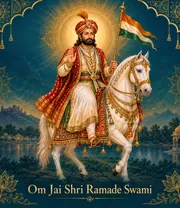
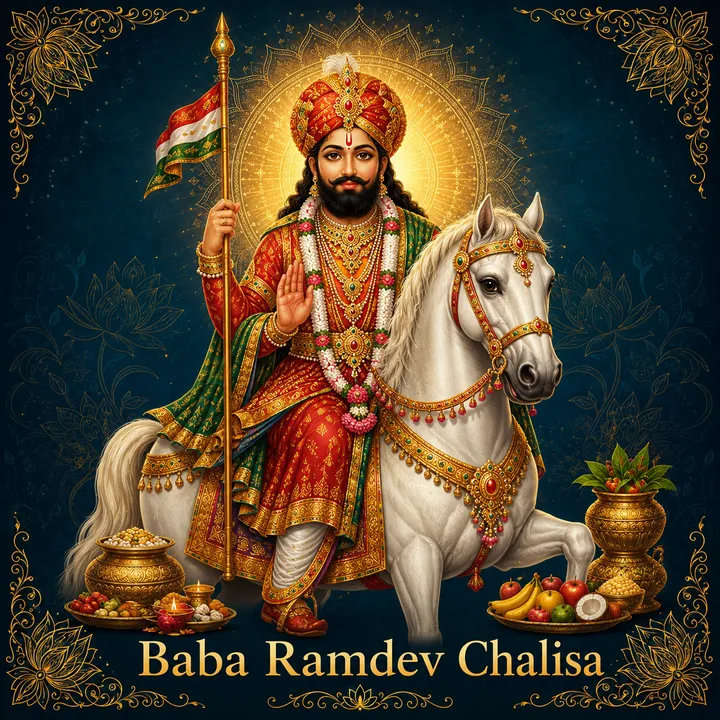
Baba Ramdev Pir — also called Ramdevji, or Ramsha Pir by Muslim devotees in the region — is a medieval folk saint venerated across Rajasthan, Gujarat, and parts of Madhya Pradesh. His principal shrine stands at Ramdevra, also known as Runicha, near Pokhran in Rajasthan’s Jaisalmer district. He is not the contemporary yoga teacher who also goes by the name Baba Ramdev; the two share only a name and honorific, and are otherwise unrelated figures separated by centuries. Devotees of the historical Ramdev Pir regard him as a human incarnation of Vishnu, and his worship crosses religious lines in the region. The Baba Ramdev Chalisa is a Hindi devotional composition of two opening dohas and forty chaupai couplets, most of which recount a traditional sequence of twenty-four parcha — miracles or proofs of divine power — attributed to him.
Origin and source
No author is named within the text of the Baba Ramdev Chalisa itself, and this page treats it as an anonymous composition within the oral and print tradition surrounding Ramdev Pir’s worship — a tradition that has also produced other chalisas and aartis to him, with wording that varies between regional and printed sources. This page presents one complete, internally consistent version of the chalisa rather than combining lines from the different variants in circulation.
The chalisa places Ramdev Pir’s birth into the household of Ajmal, a ruler of the Tanwar Rajput lineage in the Pokhran region — the household the verses themselves name repeatedly (“Ajmal putra,” “Ajmal geh”). It then recounts, in sequence, twenty-four parcha attributed to him: among them, turning a rag horse into a living one, restoring milk that had boiled over on the hearth, rescuing a merchant’s ship from a whirlpool, turning a disbeliever’s sugar to salt and, on his repentance, back to sugar again, and reviving more than one devotee’s dead son. The precise historical dating of Ramdev Pir is treated variously across sources — some traditions place him in the fourteenth century — and this page does not attempt to adjudicate between them.
This page carried the Devanagari without English meanings until October 2026, on the view that a dialect-dense folk text was better left unglossed than glossed inaccurately. The meanings printed with the verses now were made for this page from the Devanagari above, against the two published versions found that carry the full text — Bhakti Bharat and Shubh Panchang — neither of which carries a gloss, so the rendering here is this page’s own. Compared verse by verse, Bhakti Bharat prints all forty-two exactly as this page prints them. Shubh Panchang differs in eight clauses: six are spelling (परीण्डा / परींडा, भैरव / भेरव, चैबीसवां / चौबीसवां and the like) and two are wording. Its opening doha reads द्वारकेश ने आय कर where this page reads द्वार केश से आय कर, which makes the Lord of Dwarka the one who comes rather than the one come from; both land in the same place, since the chalisa calls Ramdev Pir an incarnation either way. And in the twentieth parcha it prints भक्त उजागर, “the devotee made illustrious,” where this page prints उक्त उजागर — which is likely what the line wants, and is why उक्त is left out of the English rather than rendered on a guess.
Three words are left out of the English rather than guessed at: चरा in the second parcha, which stays transliterated; परी in the thirteenth; and उक्त उजागर in the twentieth. लीले in the thirty-fourth chaupai is Lila, the horse Ramdev Pir rides in the tradition, and is rendered as the name. Two readings in the English are Marwari rather than Hindi ones and are worth naming: ने in “आत्म ज्ञान हरजी ने दीन्हों” is taken as the dative, so Ramdev gives the knowledge to Harji rather than receiving it from him, which is how every neighbouring verse runs; and थारी in the eleventh parcha is “yours.” जला नगर in the sixth is read as the city having burned rather than as a place name. Where the Overview above describes the third parcha as a rag horse brought to life, that is how the tradition tells it; the line itself says only that the horse of rags was made ready, and the English does not go further than the line.
How it is recited
The Baba Ramdev Chalisa is recited by devotees at Ramdevra and at other shrines to Ramdev Pir across Rajasthan, as well as at home. It is heard most widely during the Ramdevra Mela, the major annual fair held at his samadhi shrine in the Hindu month of Bhadrapada, when pilgrims travel to Ramdevra from across Rajasthan and neighboring states. Devotional offerings there traditionally include small wooden horses, recalling the chalisa’s own account of a horse brought to life.
Frequently asked questions
How many verses does Baba Ramdev Chalisa have?
Who is Baba Ramdev Chalisa dedicated to?
When is Baba Ramdev Chalisa typically recited?
What language is Baba Ramdev Chalisa composed in?
What tradition is Baba Ramdev Chalisa associated with?
Is an English translation of Baba Ramdev Chalisa available?
Is there a Roman transliteration of Baba Ramdev Chalisa?
Sourcing
Checked against independent sources before publishing — see our sourcing and editorial policy. Spotted an error? Report an issue .