The text
Tap Recite along to follow verse by verse — use Next, or the arrow keys.
- Stanza 1 (refrain)
ॐ जै यक्ष कुबेर हरे, स्वामी जै यक्ष जै यक्ष कुबेर हरे।शरण पड़े भगतों के, भण्डार कुबेर भरे॥
oṃ jai yakṣa kubera hare, svāmī jai yakṣa jai yakṣa kubera hare।śaraṇa paḍe bhagatõ ke, bhaṇḍāra kubera bhare॥
Victory to you, Yaksha Kubera, remover of troubles — victory, victory, O Lord, to Yaksha Kubera. For the devotees who take refuge in you, Kubera's treasury remains full.
- Stanza 2
शिव भक्तों में भक्त कुबेर बड़े, स्वामी भक्त कुबेर बड़े।दैत्य दानव मानव से, कई-कई युद्ध लड़े॥ॐ जै यक्ष कुबेर हरे, स्वामी जै यक्ष जै यक्ष कुबेर हरे।शरण पड़े भगतों के, भण्डार कुबेर भरे॥
śiva bhaktõ mẽ bhakta kubera baḍe, svāmī bhakta kubera baḍe।daitya dānava mānava se, kaī-kaī yuddha laḍe॥oṃ jai yakṣa kubera hare, svāmī jai yakṣa jai yakṣa kubera hare।śaraṇa paḍe bhagatõ ke, bhaṇḍāra kubera bhare॥
Among Shiva's devotees, the devotee Kubera is great — O Lord, the devotee Kubera is great. Against demons and men he has fought many, many battles. Victory to you, Yaksha Kubera, remover of troubles — victory, victory, O Lord, to Yaksha Kubera. For the devotees who take refuge in you, Kubera's treasury remains full.
- Stanza 3
स्वर्ण सिंहासन बैठे, सिर पर छत्र फिरे, स्वामी सिर पर छत्र फिरे।योगिनी मंगल गावैं, सब जय जय कार करैं॥ॐ जै यक्ष कुबेर हरे, स्वामी जै यक्ष जै यक्ष कुबेर हरे।शरण पड़े भगतों के, भण्डार कुबेर भरे॥
svarṇa siṃhāsana baiṭhe, sira para chatra phire, svāmī sira para chatra phire।yoginī maṅgala gāvai̐, saba jaya jaya kāra karai̐॥oṃ jai yakṣa kubera hare, svāmī jai yakṣa jai yakṣa kubera hare।śaraṇa paḍe bhagatõ ke, bhaṇḍāra kubera bhare॥
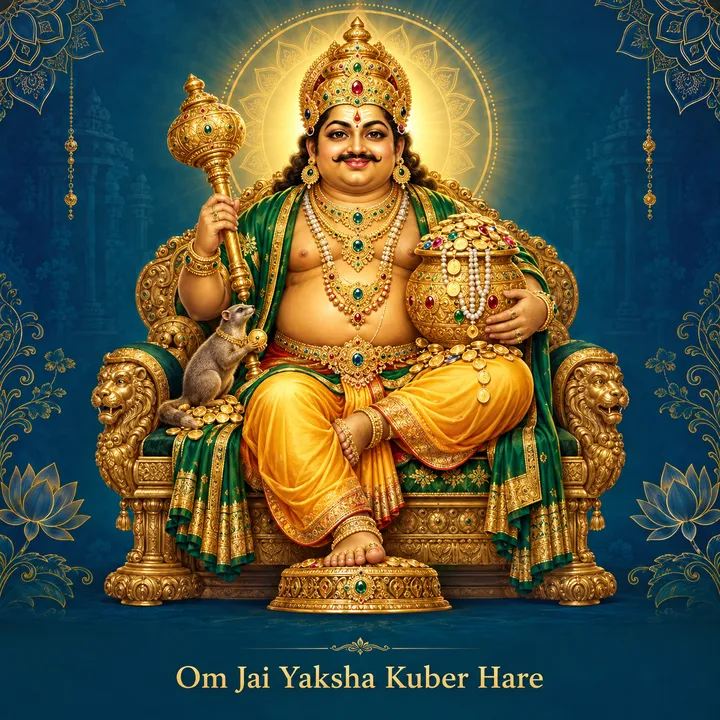
Seated upon a golden throne, a royal umbrella turns above your head, O Lord, the umbrella turns above your head. The yoginis sing songs of blessing, and all raise a cry of victory. Victory to you, Yaksha Kubera, remover of troubles — victory, victory, O Lord, to Yaksha Kubera. For the devotees who take refuge in you, Kubera's treasury remains full.
- Stanza 4
गदा त्रिशूल हाथ में, शस्त्र बहुत धरे, स्वामी शस्त्र बहुत धरे।दुख भय संकट मोचन, धनुष टंकार करें॥ॐ जै यक्ष कुबेर हरे, स्वामी जै यक्ष जै यक्ष कुबेर हरे।शरण पड़े भगतों के, भण्डार कुबेर भरे॥
gadā triśūla hātha mẽ, śastra bahuta dhare, svāmī śastra bahuta dhare।dukha bhaya saṅkaṭa mocana, dhanuṣa ṭaṅkāra karẽ॥oṃ jai yakṣa kubera hare, svāmī jai yakṣa jai yakṣa kubera hare।śaraṇa paḍe bhagatõ ke, bhaṇḍāra kubera bhare॥
A mace and trident are in your hands, you bear many weapons, O Lord, you bear many weapons. Remover of sorrow, fear and trouble, your bow resounds with its twang. Victory to you, Yaksha Kubera, remover of troubles — victory, victory, O Lord, to Yaksha Kubera. For the devotees who take refuge in you, Kubera's treasury remains full.
- Stanza 5
भाँति भाँति के व्यंजन बहुत बने, स्वामी व्यंजन बहुत बने।मोहन भोग लगावैं, साथ में उड़द चने॥ॐ जै यक्ष कुबेर हरे, स्वामी जै यक्ष जै यक्ष कुबेर हरे।शरण पड़े भगतों के, भण्डार कुबेर भरे॥
bhā̃ti bhā̃ti ke vyañjana bahuta bane, svāmī vyañjana bahuta bane।mohana bhoga lagāvai̐, sātha mẽ uḍada cane॥oṃ jai yakṣa kubera hare, svāmī jai yakṣa jai yakṣa kubera hare।śaraṇa paḍe bhagatõ ke, bhaṇḍāra kubera bhare॥
Dishes of every kind are prepared in abundance, O Lord, dishes are prepared in abundance. Sweet offerings are made to you, along with black gram. Victory to you, Yaksha Kubera, remover of troubles — victory, victory, O Lord, to Yaksha Kubera. For the devotees who take refuge in you, Kubera's treasury remains full.
- Stanza 6
बल बुद्धि विद्या दाता, हम तेरी शरण पड़े, स्वामी हम तेरी शरण पड़े।अपने भक्त जनों के, सारे काम संवारे॥ॐ जै यक्ष कुबेर हरे, स्वामी जै यक्ष जै यक्ष कुबेर हरे।शरण पड़े भगतों के, भण्डार कुबेर भरे॥
bala buddhi vidyā dātā, hama terī śaraṇa paḍe, svāmī hama terī śaraṇa paḍe।apane bhakta janõ ke, sāre kāma saṃvāre॥oṃ jai yakṣa kubera hare, svāmī jai yakṣa jai yakṣa kubera hare।śaraṇa paḍe bhagatõ ke, bhaṇḍāra kubera bhare॥
Giver of strength, wisdom and knowledge, we take refuge in you, O Lord, we take refuge in you. For your devotees, you set right all their affairs. Victory to you, Yaksha Kubera, remover of troubles — victory, victory, O Lord, to Yaksha Kubera. For the devotees who take refuge in you, Kubera's treasury remains full.
- Stanza 7
मुकुट मणी की शोभा, मोतियन हार गले, स्वामी मोतियन हार गले।अगर कपूर की बाती, घी की जोत जले॥ॐ जै यक्ष कुबेर हरे, स्वामी जै यक्ष जै यक्ष कुबेर हरे।शरण पड़े भगतों के, भण्डार कुबेर भरे॥
mukuṭa maṇī kī śobhā, motiyana hāra gale, svāmī motiyana hāra gale।agara kapūra kī bātī, ghī kī jota jale॥oṃ jai yakṣa kubera hare, svāmī jai yakṣa jai yakṣa kubera hare।śaraṇa paḍe bhagatõ ke, bhaṇḍāra kubera bhare॥
The splendor of a jeweled crown, a garland of pearls around your neck, O Lord, a garland of pearls around your neck. A wick of agarwood and camphor burns, and a lamp of ghee is lit. Victory to you, Yaksha Kubera, remover of troubles — victory, victory, O Lord, to Yaksha Kubera. For the devotees who take refuge in you, Kubera's treasury remains full.
- Stanza 8
यक्ष कुबेर जी की आरती, जो कोई नर गावे, स्वामी जो कोई नर गावे।कहत प्रेमपाल स्वामी, मनवांछित फल पावे॥ॐ जै यक्ष कुबेर हरे, स्वामी जै यक्ष जै यक्ष कुबेर हरे।शरण पड़े भगतों के, भण्डार कुबेर भरे॥
yakṣa kubera jī kī āratī, jo koī nara gāve, svāmī jo koī nara gāve।kahata premapāla svāmī, manavā̃chita phala pāve॥oṃ jai yakṣa kubera hare, svāmī jai yakṣa jai yakṣa kubera hare।śaraṇa paḍe bhagatõ ke, bhaṇḍāra kubera bhare॥
Whoever sings this aarti of Yaksha Kubera — O Lord, whoever sings it — obtains the fruit of their heart's desire; thus says Prempal, O Lord. Victory to you, Yaksha Kubera, remover of troubles — victory, victory, O Lord, to Yaksha Kubera. For the devotees who take refuge in you, Kubera's treasury remains full.
Overview
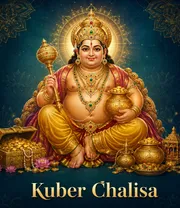
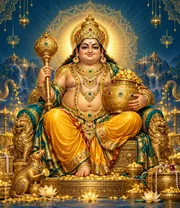
Om Jai Yaksha Kuber Hare is a short Hindi aarti addressed to Kubera (Kuber), treasurer of the gods and king of the yakshas. Built on the same “Om Jai ___ Hare” refrain form as Om Jai Jagdish Hare, it is a lamp-waving song of eight stanzas — an opening stanza that doubles as the refrain, followed by seven verses of praise, each one closing with that refrain repeated in full. Where the Kuber Chalisa is a much longer, forty-eight-verse text built mostly of specific petitions (debt relief, business growth, court cases, and so on), this aarti stays close to the traditional aarti pattern: it describes Kubera’s throne, weapons, and retinue, and closes with a simple promise that whoever sings it with devotion receives the fulfillment of their heart’s desire.
Origin and source
No verified composer is named within the aarti’s own verses beyond a signature line in the closing stanza — “कहत प्रेमपाल स्वामी” (“thus says Prempal, O Lord”) — a name embedded in the text itself, as is common practice in Hindi devotional composition, though the site is not aware of independent biographical information about this Prempal beyond that internal signature. Two Hindi lyrics archives transcribe the full eight-stanza text identically, word for word, diverging only at the kind of spelling choice a single copied source would not re-make independently — ॐ versus the phonetically equivalent ऊँ for Om, or चंद्रबिंदु versus अनुस्वार marking the same nasal sound in भाँति/भांति — which points toward two separately kept transcriptions of one stable, widely sung text rather than one page copying the other verbatim. A third, Roman-only source uses a distinct transliteration convention of its own and independently agrees on “दुख” (sorrow) in the fourth stanza where one of the Devanagari archives’ own English rendering elsewhere has an apparent slip to “sukh” (happiness) — evidence that this third source was not simply copied from that rendering.
At least one Hindi devotional archive distinguishes this aarti from a second, differently worded Kubera aarti (“Jai Kuber Swami”) that circulates alongside it — a reminder that, as with several other wealth-deity devotionals, more than one aarti addressed to Kubera exists in circulation, distinct from each other and from the Kuber Chalisa.
How it is recited
This aarti is sung especially on Dhanteras and Diwali, when Kubera is worshipped alongside Lakshmi and Ganesha as part of the festival’s wealth-focused rites. As with other aartis, it is typically sung while a lit lamp or camphor flame is circled before an image of Kubera, with the refrain — “Om Jai Yaksha Kuber Hare” — repeated by everyone present after each stanza, rather than counted on a mala the way a short mantra would be.
Frequently asked questions
How many verses does Om Jai Yaksha Kuber Hare have?
Who is Om Jai Yaksha Kuber Hare dedicated to?
When is Om Jai Yaksha Kuber Hare typically recited?
What language is Om Jai Yaksha Kuber Hare composed in?
What tradition is Om Jai Yaksha Kuber Hare associated with?
Is an English translation of Om Jai Yaksha Kuber Hare available?
Is there a Roman transliteration of Om Jai Yaksha Kuber Hare?
Sourcing
Checked against independent sources before publishing — see our sourcing and editorial policy. Spotted an error? Report an issue .