The text
Tap Recite along to follow verse by verse — use Next, or the arrow keys.
- Stanza 1 (refrain)
मंगल की सेवा, सुन मेरी देवा, हाथ जोड़ तेरे द्वार खड़े।पान सुपारी ध्वजा नारियल, ले ज्वाला तेरी भेंट धरे॥मंगल की सेवा सुन मेरी देवा॥
maṅgala kī sevā, suna merī devā, hātha joḍa tere dvāra khaḍe।pāna supārī dhvajā nāriyala, le jvālā terī bheṇṭa dhare॥maṅgala kī sevā suna merī devā॥
Hear this service, O my Goddess — with folded hands we stand at your door. Betel leaf and areca nut, a flag, a coconut, and the arti flame we bring as your offering. Hear this service, O my Goddess.
- Stanza 2
सुन जगदम्बे, कर न विलम्बे, संतन के भण्डार भरे।संतन प्रतिपाली, सदा खुशहाली, मैया जय काली कल्याण करे॥मंगल की सेवा सुन मेरी देवा॥
suna jagadambe, kara na vilambe, santana ke bhaṇḍāra bhare।santana pratipālī, sadā khuśahālī, maiyā jaya kālī kalyāṇa kare॥maṅgala kī sevā suna merī devā॥
Hear us, Mother of the world, do not delay — fill the store-house of your devotees. Nurturer of your devotees, ever their well-being — Mother Kali, grant them good fortune. Hear this service, O my Goddess.
- Stanza 3
बुद्धि विधाता, तू जग माता, मेरा कारज सिद्ध करे।चरण कमल का लिया सहारा, शरण तुम्हारी आन पड़े॥मंगल की सेवा सुन मेरी देवा॥
buddhi vidhātā, tū jaga mātā, merā kāraja siddha kare।caraṇa kamala kā liyā sahārā, śaraṇa tumhārī āna paḍe॥maṅgala kī sevā suna merī devā॥
Giver of wisdom, you are the mother of the world — accomplish my task. I have taken the support of your lotus feet; I come to fall at your refuge. Hear this service, O my Goddess.
- Stanza 4
जब-जब भीड़ पड़ी भक्तन पर, तब-तब आय सहाय करे।गुरु के वार सकल जग मोहयो, तरुणी रूप अनूप धरे॥मंगल की सेवा सुन मेरी देवा॥
jaba-jaba bhīḍa paḍī bhaktana para, taba-taba āya sahāya kare।guru ke vāra sakala jaga mohayo, taruṇī rūpa anūpa dhare॥maṅgala kī sevā suna merī devā॥
Whenever trouble has fallen upon your devotees, you have come each time to their aid. On Thursday, Guru's own day, you enchanted the whole world, taking on a youthful form beyond compare. Hear this service, O my Goddess.
- Stanza 5
माता होकर पुत्र खिलावे, कहीं भार्या भोग करे।संतन सुखदाई सदा सहाई, संत खड़े जयकार करे॥मंगल की सेवा सुन मेरी देवा॥
mātā hokara putra khilāve, kahī bhāryā bhoga kare।santana sukhadāī sadā sahāī, santa khaḍe jayakāra kare॥maṅgala kī sevā suna merī devā॥
As a mother she feeds her child, elsewhere as a wife she shares life's enjoyments. Ever the giver of happiness and help to the devout, the saintly stand and sing her victory. Hear this service, O my Goddess.
- Stanza 6
ब्रह्मा विष्णु महेश फल लिए, भेंट देन तेरे द्वार खड़े।अटल सिंहासन बैठी मेरी माता, सिर सोने का छत्र फिरे॥मंगल की सेवा सुन मेरी देवा॥
brahmā viṣṇu maheśa phala liye, bheṇṭa dena tere dvāra khaḍe।aṭala siṃhāsana baiṭhī merī mātā, sira sone kā chatra phire॥maṅgala kī sevā suna merī devā॥
Brahma, Vishnu, and Mahesh stand at your door bearing fruit as an offering. My Mother sits upon her unshakable throne, a golden canopy turning above her head. Hear this service, O my Goddess.
- Stanza 7
वार शनिश्चर कुमकुम वरणी, जब लुँकड़ पर हुकुम करे।खड्ग खप्पर त्रिशूल हाथ लिए, रक्तबीज को भस्म करे॥मंगल की सेवा सुन मेरी देवा॥
vāra śaniścara kumakuma varaṇī, jaba luṅkaḍa para hukuma kare।khaḍga khappara triśūla hātha liye, raktabīja ko bhasma kare॥maṅgala kī sevā suna merī devā॥
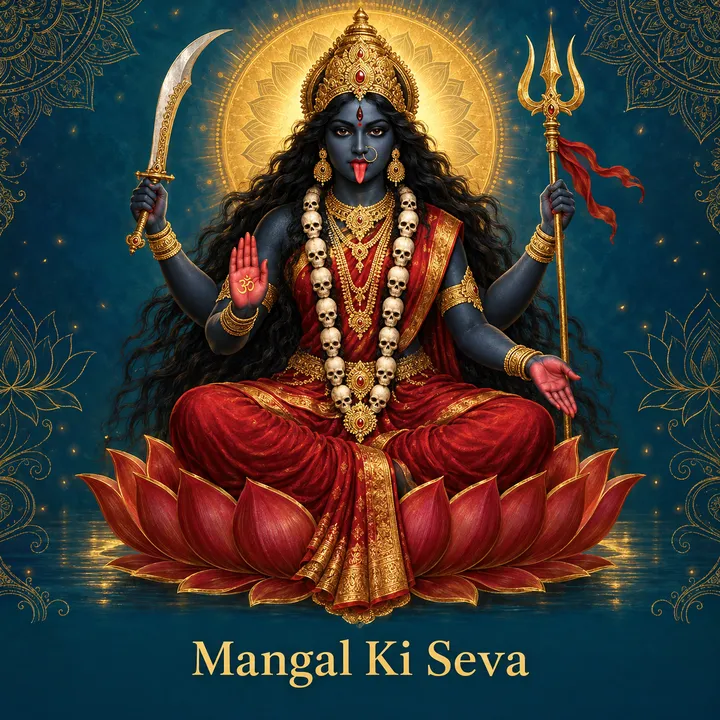
On Saturday, marked with vermilion, she gives her command to her attendant. Sword, skull-bowl, and trident in hand, she reduces the demon Raktabija to ash. Hear this service, O my Goddess.
- Stanza 8
शुंभ निशुंभ को क्षण में मारे, महिषासुर को पकड़ दले।आदित वारी आदि भवानी, जन अपने को कष्ट हरे॥मंगल की सेवा सुन मेरी देवा॥
śuṃbha niśuṃbha ko kṣaṇa meṃ māre, mahiṣāsura ko pakaḍa dale।āditavārī ādi bhavānī, jana apane ko kaṣṭa hare॥maṅgala kī sevā suna merī devā॥
In an instant she slew Shumbha and Nishumbha, and seized and crushed the buffalo-demon Mahishasura. Lady of Sunday, primordial Bhavani, she removes the suffering of her own devotees. Hear this service, O my Goddess.
- Stanza 9
कुपित होय कर दानव मारे, चण्ड मुण्ड सब चूर करे।जब तुम देखी दया रूप हो, पल में संकट दूर करे॥मंगल की सेवा सुन मेरी देवा॥
kupita hoya kara dānava māre, caṇḍa muṇḍa saba cūra kare।jaba tuma dekhī dayā rūpa ho, pala meṃ saṃkaṭa dūra kare॥maṅgala kī sevā suna merī devā॥
Growing wrathful, she slays the demons, and shatters Chanda and Munda entirely. Whenever you have shown your compassionate form, you have removed every crisis in an instant. Hear this service, O my Goddess.
- Stanza 10
सौम्य स्वभाव धरयो मेरी माता, जन की अर्ज कबूल करे।सात बार की महिमा बरनी, सब गुण कौन बखान करे॥मंगल की सेवा सुन मेरी देवा॥
saumya svabhāva dharayo merī mātā, jana kī arja kabūla kare।sāta bāra kī mahimā baranī, saba guṇa kauna bakhāna kare॥maṅgala kī sevā suna merī devā॥
My Mother has also taken on a gentle nature, and accepts the petitions of her people. Her glory has been told again and again — who can fully describe all her virtues? Hear this service, O my Goddess.
- Stanza 11
सिंह पीठ पर चढ़ी भवानी, अटल भवन में राज करे।दर्शन पावें मंगल गावें, सिद्ध साधक तेरी भेंट धरे॥मंगल की सेवा सुन मेरी देवा॥
siṃha pīṭha para caḍhī bhavānī, aṭala bhavana meṃ rāja kare।darśana pāve maṅgala gāve, siddha sādhaka terī bheṇṭa dhare॥maṅgala kī sevā suna merī devā॥
Mounted upon a lion, Bhavani reigns in her unshakable abode. Those who receive her vision sing of her grace; accomplished seekers bring their offerings to you. Hear this service, O my Goddess.
- Stanza 12
ब्रह्मा वेद पढ़े तेरे द्वारे, शिव शंकर हरि ध्यान धरे।इन्द्र कृष्ण तेरी करे आरती, चँवर कुबेर डुलाय रहे॥मंगल की सेवा सुन मेरी देवा॥
brahmā veda paḍhe tere dvāre, śiva śaṅkara hari dhyāna dhare।indra kṛṣṇa terī kare āratī, caṃvara kubera ḍulāya rahe॥maṅgala kī sevā suna merī devā॥
Brahma recites the Vedas at your door; Shiva, Shankar, and Hari hold you in meditation. Indra and Krishna perform your arti, while Kubera waves the ceremonial fan over you. Hear this service, O my Goddess.
- Stanza 13 (closing)
जय जननी जय मातु भवानी, अटल भवन में राज करे।संतन प्रतिपाली सदा खुशहाली, मैया जय काली कल्याण करे॥मंगल की सेवा सुन मेरी देवा॥
jaya jananī jaya mātu bhavānī, aṭala bhavana meṃ rāja kare।santana pratipālī sadā khuśahālī, maiyā jaya kālī kalyāṇa kare॥maṅgala kī sevā suna merī devā॥
Victory to the Mother, victory to Mother Bhavani, who reigns in her unshakable abode. Nurturer of her devotees, ever their well-being — Mother Kali, grant them good fortune. Hear this service, O my Goddess.
Overview
Mangal Ki Seva — “hear this service, O my Goddess,” from its opening line — is a Hindi aarti of thirteen stanzas addressed to Mahakali. It is commonly known simply as the Mahakali Aarti, and the phrase “मंगल की सेवा सुन मेरी देवा” from its own opening stanza recurs as a one-line refrain after every stanza that follows, the way many aartis return to their opening line as a sung chorus.
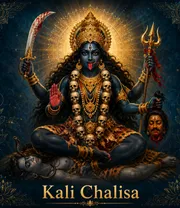
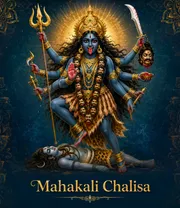
This is a different composition from both chalisas this site already carries for the same goddess: the Mahakali Chalisa (opening “जय काली कंकाल मालिनी”) and the Kali Chalisa (opening “जय काली जगदम्ब जय”) are both long chalisas built as a catalogue of the Goddess’s many names, in the chaupai-and-doha meter typical of that genre. Mangal Ki Seva is a shorter-lined aarti built instead around a devotee’s plea at the Goddess’s door — offering betel leaf, coconut, and a lit flame — interwoven with a narrower set of images: her days of the week, her battles against Shumbha, Nishumbha, Mahishasura, and Raktabija, and the gods who attend her court. It also shares no lines with this site’s other Kali aarti, Ambe Tu Hai Jagdambe Kali, which opens instead “अम्बे तू है जगदम्बे काली।“
Origin and source
This page’s text was cross-checked across several Hindi devotional lyrics sites and shows at least two independently transcribed lineages rather than one shared copy. One source presents the aarti as thirteen clean, line-broken stanzas each followed by the single-line refrain “मंगल की सेवा सुन मेरी देवा”; a second, an unrelated devotional blog with an entirely different page format (prose paragraphs, an FAQ section, and — uniquely to that source — an additional invocatory Sanskrit line, “ॐ जयंति मंगला काली भद्रकाली कपालिनी,” prefacing the aarti proper, which this page omits since no other source carries it and it reads as a separate stock invocation rather than part of this aarti’s own verses) groups the same content differently, treating “संतन प्रतिपाली सदा खुशहाली…कल्याण करे” as the recurring line instead. A third cluster of sites agrees closely with each other on wording and appears to share a common upstream transcription, but sides with the second, independent source rather than the first at several specific points of difference — most clearly, “गुरु के वार” (Guru’s day, Thursday) against the first source’s “बार-बार तैं” (again and again) in the stanza describing the Goddess enchanting the world, and “फल लिए” (bearing fruit) against “सहसफण लिए” in the stanza naming Brahma, Vishnu, and Mahesh. This page follows that two-against-one majority at each such point. One word remains genuinely uncertain — “लुँकड़”/“लांगुर” in the stanza describing her command on Saturday — where the sources split unevenly rather than along clean lineage lines; this page keeps the more widely printed “लुँकड़” reading and translates the line conservatively, without asserting a specific identity for the term. No source names an author; this page treats the aarti’s authorship as traditional and undocumented, the same posture the site’s other chalisa and aarti pages take toward their own unattributed compositions.
Verse-count note: the source list for this rollout gives an estimate of five stanzas. Every source consulted for the full aarti text instead confirms thirteen stanzas, each closed by the same one-line refrain described above; this page follows the verified thirteen-stanza text rather than the estimate.
How it is recited
Mangal Ki Seva is recited by devotees of Mahakali especially around Kali Puja, and is also associated with Navratri. Several sources also note Tuesday and Saturday as days particularly linked to reciting it, alongside other Shakta devotional texts sung on those days. As with other aartis, it is typically sung before a lit lamp or an image of the Goddess, with offerings of betel leaf, areca nut, and coconut placed before her as the aarti describes, and the refrain taken up by everyone present after each stanza.
Frequently asked questions
How many verses does Mangal Ki Seva have?
Who is Mangal Ki Seva dedicated to?
When is Mangal Ki Seva typically recited?
What language is Mangal Ki Seva composed in?
What tradition is Mangal Ki Seva associated with?
Is an English translation of Mangal Ki Seva available?
Is there a Roman transliteration of Mangal Ki Seva?
Sourcing
Checked against independent sources before publishing — see our sourcing and editorial policy. Spotted an error? Report an issue .