The text
Tap Recite along to follow verse by verse — use Next, or the arrow keys.
- Stanza 1 (refrain)
जय जय तुलसी माता, सब जग की सुख दाता, सबकी वर माता॥
jaya jaya tulasī mātā, saba jaga kī sukha dātā, sabakī vara mātā॥
Victory, victory to Mother Tulsi — giver of happiness to the whole world, mother who grants every boon.
- Stanza 2
सब योगों के ऊपर, सब रोगों के ऊपर।रुज से रक्षा करके, भव त्राता॥जय जय तुलसी माता, सब जग की सुख दाता, सबकी वर माता॥
saba yogoṃ ke ūpara, saba rogoṃ ke ūpara।ruja se rakṣā karake, bhava trātā॥jaya jaya tulasī mātā, saba jaga kī sukha dātā, sabakī vara mātā॥
You stand above every yoga and above every illness; guarding us from disease, you carry us across worldly existence. Victory, victory to Mother Tulsi — giver of happiness to the whole world, mother who grants every boon.
- Stanza 3
बटु पुत्री है श्यामा, सूर बल्ली है ग्राम्या।विष्णु प्रिय जो तुमको सेवे, सो नर तर जाता॥जय जय तुलसी माता, सब जग की सुख दाता, सबकी वर माता॥
baṭu putrī hai śyāmā, sūra ballī hai grāmyā।viṣṇu priya jo tumako seve, so nara tara jātā॥jaya jaya tulasī mātā, saba jaga kī sukha dātā, sabakī vara mātā॥
You are the young, dark-complexioned Shyama, a divine creeper of the gods found in every village home; whoever serves you, so dear to Vishnu, that person is carried across. Victory, victory to Mother Tulsi — giver of happiness to the whole world, mother who grants every boon.
- Stanza 4
हरि के शीश विराजत, त्रिभुवन से हो वंदित।पतित जनों की तारिणी, तुम हो विख्याता॥जय जय तुलसी माता, सब जग की सुख दाता, सबकी वर माता॥
hari ke śīśa virājata, tribhuvana se ho vandita।patita janoṃ kī tāriṇī, tuma ho vikhyātā॥jaya jaya tulasī mātā, saba jaga kī sukha dātā, sabakī vara mātā॥
You rest upon Hari's head, worshipped by all three worlds; you are renowned as the deliverer of the fallen. Victory, victory to Mother Tulsi — giver of happiness to the whole world, mother who grants every boon.
- Stanza 5
लेकर जन्म विजन में, आई दिव्य भवन में।मानव लोक तुम्हीं से, सुख संपति पाता॥जय जय तुलसी माता, सब जग की सुख दाता, सबकी वर माता॥
lekara janma vijana meṃ, āī divya bhavana meṃ।mānava loka tumhīṃ se, sukha sampati pātā॥jaya jaya tulasī mātā, saba jaga kī sukha dātā, sabakī vara mātā॥
Taking birth in a lonely, forsaken place, you came to this divine dwelling; through you alone the world of mortals finds happiness and prosperity. Victory, victory to Mother Tulsi — giver of happiness to the whole world, mother who grants every boon.
- Stanza 6
हरि को तुम अति प्यारी, श्याम वर्ण सुकुमारी।प्रेम अजब है उनका, तुमसे कैसा नाता॥जय जय तुलसी माता, सब जग की सुख दाता, सबकी वर माता॥
hari ko tuma ati pyārī, śyāma varṇa sukumārī।prema ajaba hai unakā, tumase kaisā nātā॥jaya jaya tulasī mātā, saba jaga kī sukha dātā, sabakī vara mātā॥
You are most dear to Hari, dark-complexioned and gentle; his love for you is wondrous — what a bond you share with him! Victory, victory to Mother Tulsi — giver of happiness to the whole world, mother who grants every boon.
Overview
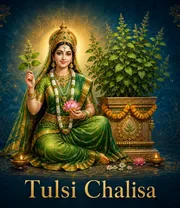
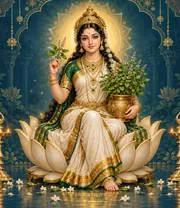
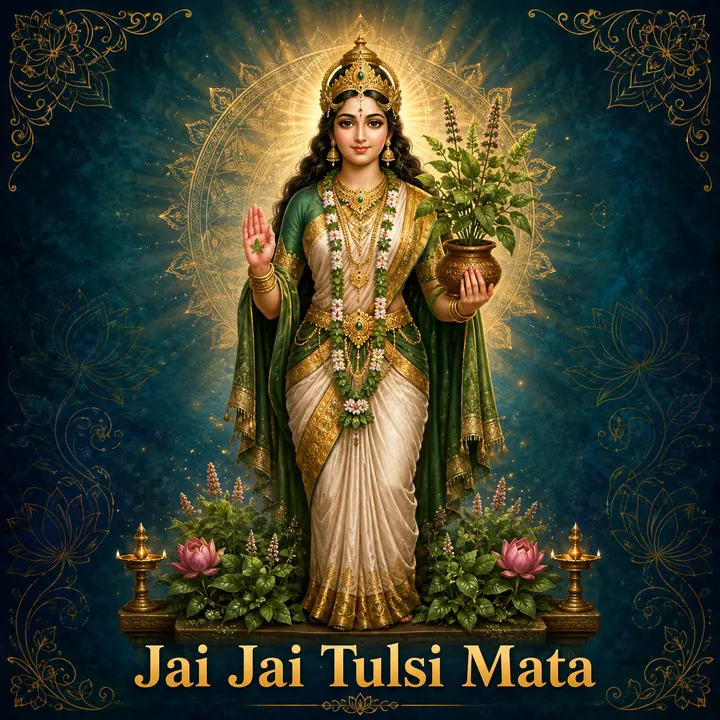
Jai Jai Tulsi Mata is a short Hindi aarti addressed to Tulsi Mata, the sacred basil plant kept and worshipped in most Vaishnav households. Its opening line — “Jai jai Tulsi Mata, sab jag ki sukh data, sabki var mata” — doubles as the refrain, repeated after each of the five stanzas that follow. The stanzas praise Tulsi as a healer who protects from illness, a divine creeper found in every village home, the deliverer of the fallen, and, above all, the plant most dear to Hari (Vishnu), who rests upon his head.
Origin and source
Jai Jai Tulsi Mata circulates in devotional collections without a documented individual composer, unlike some better-known aartis of the same era. Its imagery draws on the Puranic association of Tulsi with Vishnu: in Vaishnav tradition she is honored as his most beloved plant and, in the Tulsi Vivah story observed each Kartik, as the one ceremonially married to him in the form of the Shaligram stone. The aarti’s language reflects this closeness, describing Tulsi’s place at Hari’s feet and head and calling her the protector and deliverer of ordinary worshippers.
How it is recited
Jai Jai Tulsi Mata is sung daily by many households at the tulsi plant kept in the courtyard or on a balcony, typically at dusk when a lamp is lit before it. It is sung with particular devotion during Tulsi Vivah, the ceremony that marks Tulsi’s ritual marriage to Vishnu, and throughout the month of Kartik, when devotees circle the tulsi plant with lit lamps each evening. As with most aartis, the refrain is repeated by everyone present after each stanza while the lamp is circled before the plant.
Frequently asked questions
How many verses does Jai Jai Tulsi Mata have?
Who is Jai Jai Tulsi Mata dedicated to?
When is Jai Jai Tulsi Mata typically recited?
What language is Jai Jai Tulsi Mata composed in?
What tradition is Jai Jai Tulsi Mata associated with?
Is an English translation of Jai Jai Tulsi Mata available?
Is there a Roman transliteration of Jai Jai Tulsi Mata?
Sourcing
Checked against independent sources before publishing — see our sourcing and editorial policy. Spotted an error? Report an issue .