Overview
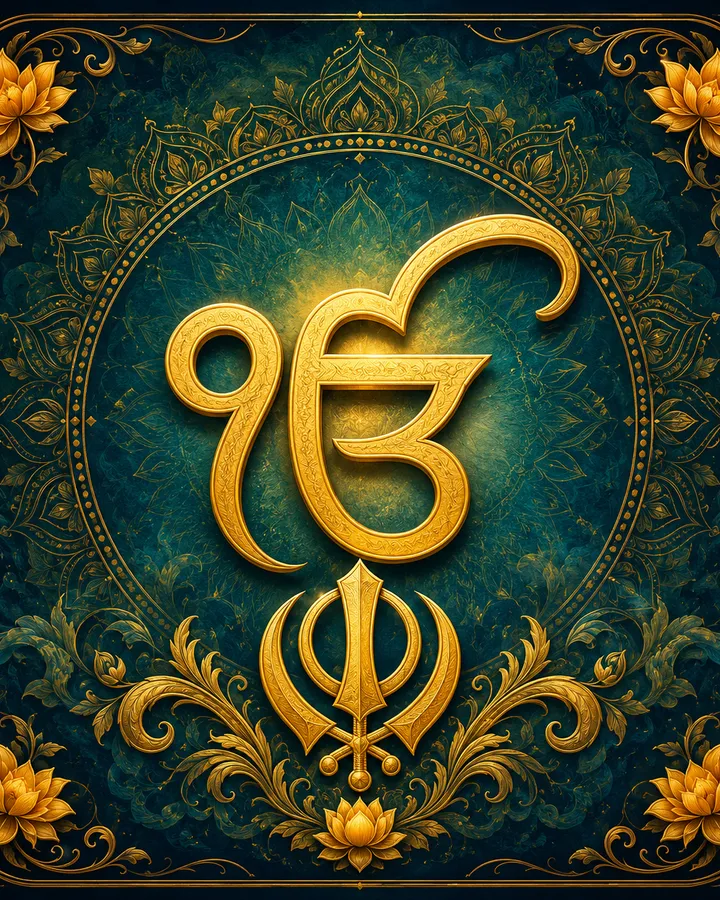
Ek Onkar Satnam Shri Waheguru is a Sikh devotional phrase, not a Hindu mantra. Sikhism is a distinct, independent religion founded on the teachings of Guru Nanak and the nine Gurus who followed him, and it holds a strictly monotheistic view of God as formless and without image. This phrase brings together three terms Sikhs use to speak of and address that one God.
Origin and source
The phrase opens with Ek Onkar and Satnam, the first two terms of the Mool Mantar — the foundational verse that opens the Guru Granth Sahib, Sikhism’s central scripture. The Mool Mantar itself begins Ik Onkar Sat Nam Karta Purakh Nirbhau Nirvair Akal Murat Ajuni Saibhang Gur Prasad — “There is one God, Truth is His Name, the Creator, without fear, without hatred, timeless in form, beyond birth, self-existent, known by the Guru’s grace” — and continues from there; it does not include the word Waheguru or “Shri” at all.
This page’s phrase is best understood as a shorter devotional form that echoes the Mool Mantar’s opening two terms and joins them with Shri Waheguru, an honorific way of addressing God by Waheguru, the name most widely used in Sikh greeting, prayer, and remembrance (naam simran). Wording close to this — Ik Onkar Satnam Shri Waheguru — does appear in devotional recitation contexts outside the Guru Granth Sahib itself. It should not be taken as a verbatim quotation from Sikh scripture; it is a devotional combination of foundational terms of address to God rather than a scriptural line in its own right.
The Mool Mantar in full
The phrase on this page draws its first two terms from the Mool Mantar, so the whole verse is given here in the script it is written in, in Devanagari, and in transliteration. This is the text as it opens the Guru Granth Sahib (Ang 1), not a lyric from any recording of it.
ੴ ਸਤਿ ਨਾਮੁ ਕਰਤਾ ਪੁਰਖੁ ਨਿਰਭਉ ਨਿਰਵੈਰੁ ਅਕਾਲ ਮੂਰਤਿ ਅਜੂਨੀ ਸੈਭੰ ਗੁਰ ਪ੍ਰਸਾਦਿ ॥
इक ओंकार सति नामु करता पुरखु निरभउ निरवैरु अकाल मूरति अजूनी सैभं गुर प्रसादि ॥
ik oṅkār sati nāmu kartā purakhu nirbhau nirvairu akāl mūrati ajūnī saibhaṅ gur prasādi ॥
Line by line, as it is commonly rendered:
- ੴ (Ik Onkar) — there is one God, one Creator of all.
- ਸਤਿ ਨਾਮੁ (Sat Nam) — Truth is the Name.
- ਕਰਤਾ ਪੁਰਖੁ (Karta Purakh) — the Creator, the Doer, present in creation.
- ਨਿਰਭਉ (Nirbhau) — without fear.
- ਨਿਰਵੈਰੁ (Nirvair) — without enmity.
- ਅਕਾਲ ਮੂਰਤਿ (Akal Murat) — of timeless form, beyond death.
- ਅਜੂਨੀ (Ajuni) — unborn, beyond the cycle of birth.
- ਸੈਭੰ (Saibhang) — self-existent, self-illumined.
- ਗੁਰ ਪ੍ਰਸਾਦਿ (Gur Prasad) — known by the Guru’s grace.
Sikh tradition treats the Mool Mantar as the root of the whole Guru Granth Sahib: the Japji Sahib that follows it, and the scripture as a whole, are read as its unfolding. Renderings of individual words vary between translators — Karta Purakh as “Creator Person” or “Creative Being,” Saibhang as “self-existent” or “self-manifest” — and the glosses above follow the most common English renderings rather than settling those differences.
Word-by-word meaning
Tap a word to see what it means and where it sits in the verse.
"one" — affirming that God is one, without a second
| Sanskrit | IAST | Meaning |
|---|---|---|
| एक | ek | "one" — affirming that God is one, without a second |
| ओंकार | oṅkār | onkar — the One Universal Creator, the concept represented in Gurmukhi by the symbol ੴ at the head of the Guru Granth Sahib |
| सतनाम | satnām | "true is the Name" — that God's Name is Truth itself |
| श्री | śrī | an honorific prefix of respect, placed here before Waheguru |
| वाहेगुरु | vāhegurū | Waheguru — "wonderful lord/teacher," the name by which Sikhs most commonly address God |
Meaning of the whole
Read together, the phrase moves from a statement about God to an address to God. Ek Onkar and Satnam declare who God is: one, and true beyond all names. Shri Waheguru then turns to speak to that God directly, using the name Sikhs reach for most often in daily life — in greeting, in prayer, and in quiet remembrance. The phrase does not describe a deity with form or attributes beyond these; it affirms oneness and truth, then addresses that oneness by name.
How it is recited
This phrase is used devotionally, spoken or chanted as an expression of remembrance rather than counted through a fixed ritual formula. Waheguru itself is the name most commonly repeated in Sikh naam simran, the practice of remembering God’s Name, whether in formal meditation or informally through the day.