Overview
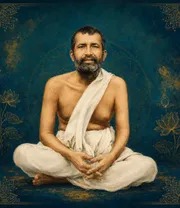
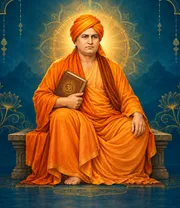
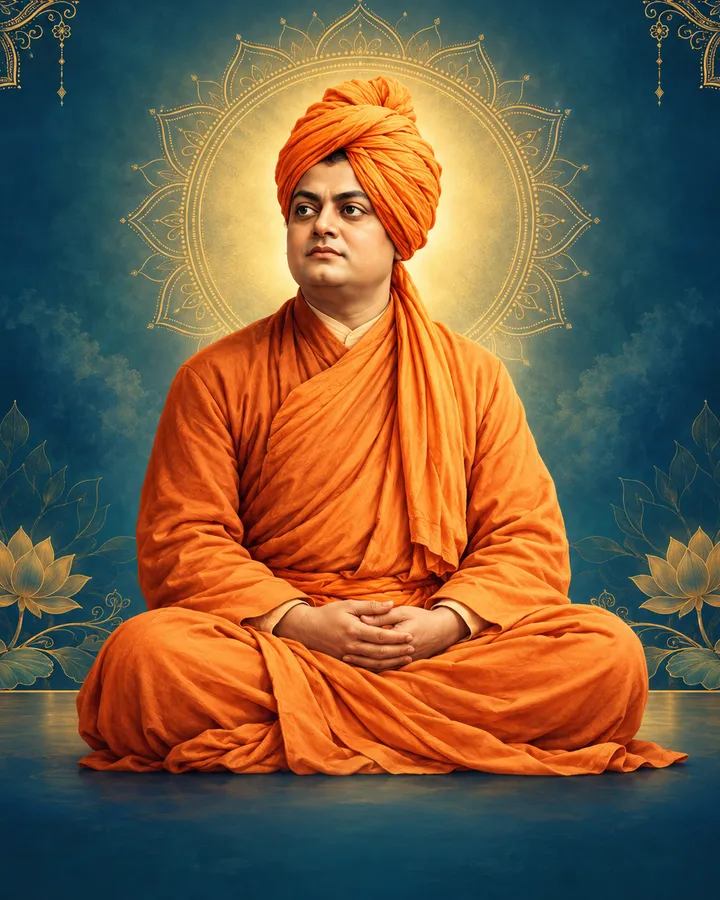
Swami Vivekananda was the chief monastic disciple of Ramakrishna, and the figure most responsible for introducing Vedanta philosophy and yoga to a Western audience. Within the Ramakrishna Mission and its wider tradition, Ramakrishna himself is venerated as a direct manifestation of the divine; Vivekananda, by contrast, is remembered within that same tradition as its founder-monk and chief disciple, not as an avatar in his own right.
Life
Born Narendranath Datta in Calcutta to an aristocratic Bengali Kayastha family, he met Ramakrishna in 1881, and their relationship deepened after Vivekananda’s father’s death in 1884 left the family in financial hardship. Following Ramakrishna’s death in 1886, Vivekananda organized his teacher’s disciples into a formal monastic order, the Ramakrishna Math, at Baranagar. In 1893 he traveled to the United States and delivered the opening address of the World’s Parliament of Religions in Chicago, beginning “Sisters and Brothers of America” — an address widely reported as warmly and enthusiastically received, though the precise figures sometimes quoted for the length of its ovation and the size of its audience are popular retelling rather than confirmed by contemporary primary record. He went on to found Vedanta Societies in New York and San Francisco before returning to India, where in 1897 he founded the Ramakrishna Mission at Belur — a separate institution from the Math, founded eleven years later, dedicated specifically to organized humanitarian and educational work.
He died at Belur Math on 4 July 1902, at 39, after a day spent teaching and discussing plans for a Vedic college, having reportedly told others he did not expect to see forty. His death is traditionally attributed to a ruptured blood vessel in the brain, compounded by chronic ailments including diabetes — a cause of death this page presents as the tradition’s own account rather than an independently verified clinical record.
Practical Vedanta
Vivekananda’s central teaching, often called “practical Vedanta,” applied the non-dualist philosophy he inherited from Ramakrishna and the wider Vedanta tradition to everyday ethical and social life. Central to this was his understanding of seva, service to others, as a form of spiritual discipline in its own right — serving other people as manifestations of the divine, not merely as an act of charity separate from spiritual practice. His 1896 book Raja Yoga presented a systematic synthesis of yogic philosophy that was highly influential in introducing yoga concepts to Western readers.
Legacy
The Ramakrishna Math, organized in 1886, and the Ramakrishna Mission, founded separately in 1897, both remain highly active today — as of 2025, some 263 centers worldwide, running hospitals, schools, colleges, and disaster relief work across India, Bangladesh, the United States, and elsewhere. His birthday, 12 January, is observed in India as National Youth Day, and his Chicago address is still cited by the Parliament of the World’s Religions organization itself as a founding moment in modern interfaith dialogue.
Worth knowing
- He delivered the opening address of the World's Parliament of Religions in Chicago on 11 September 1893, beginning "Sisters and Brothers of America" — an address widely reported as receiving an enthusiastic, prolonged reception, though the specific figures sometimes quoted for its length and audience size are popular retelling rather than confirmed by primary record.
- He organized the monastic Ramakrishna Math at Baranagar in 1886 and separately founded the Ramakrishna Mission, its humanitarian and educational wing, in 1897 — two distinct institutions founded eleven years apart, not one founding in a single year.
- His teaching of "practical Vedanta" applied Vedantic non-dualism to everyday ethical and social life, with seva, service to others as manifestations of the divine, treated as a spiritual discipline in its own right rather than only charity.
- His birthday, 12 January, is observed in India as National Youth Day.
- He died at Belur Math after a day spent teaching and discussing plans for a Vedic college, having reportedly predicted he would not live to see forty; his death is traditionally attributed to a ruptured blood vessel in the brain, alongside chronic ailments including diabetes.