The text
Tap Recite along to follow verse by verse — use Next, or the arrow keys.
- Opening dohas
- Doha 1 (opening)
शीश नवा अरिहंत को, सिद्धन करू प्रणाम।उपाध्याय आचार्य का ले सुखकारी नाम॥
śīśa navā arihanta ko, siddhana karū praṇāma।upādhyāya ācārya kā le sukhakārī nāma॥
I bow my head to the Arihantas, and offer my salutation to the Siddhas; I take the auspicious name of the Upadhyayas and the Acharyas.
- Doha 2 (opening)
सर्व साधू और सरस्वती, जिनमन्दिर सुखकार।महावीर भगवान् को मन मंदिर में धार॥
sarva sādhū aura sarasvatī, jinamandira sukhakāra।mahāvīra bhagavān ko mana mandira meṁ dhāra॥
I honor all the Sadhus and Saraswati, and the Jina temple that brings well-being; I hold Lord Mahavir enshrined in the temple of my heart.
- The 18 chaupais
- Chaupai 1
जय महावीर दयालु स्वामी, वीर प्रभु तुम जग में नामी।वर्धमान हैं नाम तुम्हारा, लगे हृदय को प्यारा प्यारा॥
jaya mahāvīra dayālu svāmī, vīra prabhu tuma jaga meṁ nāmī।vardhamāna haiṁ nāma tumhārā, lage hṛdaya ko pyārā pyārā॥
Victory to Mahavir, compassionate Lord — heroic Master, renowned throughout the world; Vardhaman is your name, so dear, so dear to the heart.
- Chaupai 2
शांत छवि मन मोहिनी मूरत, शांत हंसिली सोहिनी सूरत।तुमने वेश दिगंबर धारा, करम शत्रु भी तुमसे हारा॥
śānta chavi mana mohinī mūrata, śānta hansilī sohinī sūrata।tumane veśa digambara dhārā, karama śatru bhī tumase hārā॥
Your form is peaceful, its beauty captivates the mind; your smiling face is peaceful and lovely; you took on the sky-clad (Digambara) form of renunciation, and even the enemy Karma was defeated by you.
- Chaupai 3
क्रोध मान वा लोभ भगाया, माया ने तुमसे डर खाया।तू सर्वज्ञ सर्व का ज्ञाता, तुझको दुनिया से क्या नाता॥
krodha māna vā lobha bhagāyā, māyā ne tumase ḍara khāyā।tū sarvajña sarva kā jñātā, tujhako duniyā se kyā nātā॥
You drove away anger, pride, and greed; even delusion feared you; you are all-knowing, the knower of everything — what tie do you still have with this world?
- Chaupai 4
तुझमे नहीं राग वा द्वेष, वीतराग तू हित उपदेश।तेरा नाम जगत में सच्चा, जिसको जाने बच्चा बच्चा॥
tujhame nahīṁ rāga vā dveṣa, vītarāga tū hita upadeśa।terā nāma jagata meṁ saccā, jisako jāne baccā baccā॥
In you there is neither attachment nor aversion; passionless, you give teaching for everyone's good; your name is true throughout the world, known even to every child.
- Chaupai 5
भूत प्रेत तुमसे भय खावें, व्यंतर राक्षस सब भाग जावें।महा व्याधि मारी न सतावे, अतिविकराल काल डर खावे॥
bhūta preta tumase bhaya khāveṁ, vyantara rākṣasa saba bhāga jāveṁ।mahā vyādhi mārī na satāve, ativikarāla kāla ḍara khāve॥
Ghosts and spirits fear you, and demons of the lower realms all flee; great disease and plague cannot trouble your devotee, and even fearsome death takes fright.
- Chaupai 6
काला नाग होय फन धारी, या हो शेर भयंकर भारी।ना ही कोई बचाने वाला, स्वामी तुम ही करो प्रतिपाला॥
kālā nāga hoya phana dhārī, yā ho śera bhayaṅkara bhārī।nā hī koī bacāne vālā, svāmī tuma hī karo pratipālā॥
Be it a black hooded cobra, or a huge and terrifying lion — when no one else is there to save, Lord, you alone protect and sustain.
- Chaupai 7
अग्नि दावानल सुलग रही हो, तेज हवा से भड़क रही हो।नाम तुम्हारा सब दुख खोवे, आग एकदम ठंडी होवे॥
agni dāvānala sulaga rahī ho, teja havā se bhaḍaka rahī ho।nāma tumhārā saba dukha khove, āga ekadama ṭhaṇḍī hove॥
Even if a forest fire is blazing, fanned wild by a strong wind, your name takes away all suffering, and the fire turns cold at once.
- Chaupai 8
हिंसामय था भारत सारा, तब तुमने लीना अवतारा।जन्म लिया कुंडलपुर नगरी, हुई सुखी तब जनता सगरी॥
hiṃsāmaya thā bhārata sārā, taba tumane līnā avatārā।janma liyā kuṇḍalapura nagarī, huī sukhī taba janatā sagarī॥
All of Bharat was steeped in violence when you took your incarnation; you were born in the city of Kundalpur, and all its people became happy.
- Chaupai 9
सिद्धार्थ जी पिता तुम्हारे, त्रिशाला की आँखों के तारे।छोड़ के सब झंझट संसारी, स्वामी हुए बाल ब्रह्मचारी॥
siddhārtha jī pitā tumhāre, triśālā kī āṅkhoṁ ke tāre।choḍa ke saba jhaṅjhaṭa sansārī, svāmī hue bāla brahmacārī॥
Siddhartha was your father, and you were the apple of Trishala's eye; leaving behind all the entanglements of the world, you, Lord, remained celibate from childhood.
- Chaupai 10
पंचम काल महा दुखदायी, चांदनपुर महिमा दिखलाई।टीले में अतिशय दिखलाया, एक गाय का दुध झराया॥
pañcama kāla mahā dukhadāyī, cāndanapura mahimā dikhalāī।ṭīle meṁ atiśaya dikhalāyā, eka gāya kā dudha jharāyā॥
In this fifth age of great suffering, you showed your glory at Chandanpur; in a mound you displayed a miracle — a cow that let its milk pour down.
- Chaupai 11
सोच हुआ मन में ग्वाले के, पहुँचा एक फावड़ा लेके।सारा टीला खोद गिराया, तब तुमने दर्शन दिखलाया॥
soca huā mana meṁ gvāle ke, pahuṅcā eka phāvaḍā leke।sārā ṭīlā khoda girāyā, taba tumane darśana dikhalāyā॥
Wonder arose in the cowherd's mind, and he came bringing a spade; he dug away the whole mound — and then you showed him your presence.
- Chaupai 12
जोधराज को दुख ने घेरा, उसने नाम जपा जब तेरा।ठंडा हुआ तोप का गोला, तब सब ने जयकारा बोला॥
jodharāja ko dukha ne gherā, usane nāma japā jaba terā।ṭhaṇḍā huā topa kā golā, taba saba ne jayakārā bolā॥
When suffering surrounded Jodhraj and he took your name in prayer, the cannonball turned cold, and everyone shouted your praise.
- Chaupai 13
मंत्री ने मंदिर बनवाया, राजा ने भी दरब लगाया।बड़ी धर्मशाला बनवाई, तुमको लाने की ठहराई॥
mantrī ne mandira banavāyā, rājā ne bhī daraba lagāyā।baḍī dharmaśālā banavāī, tumako lāne kī ṭhaharāī॥
The minister had a temple built, and the king too contributed wealth; a great pilgrims' rest-house was raised, and arrangements made to bring you there.
- Chaupai 14
तुमने तोड़ी बीसों गाडी, पहिया खिसका नहीं अगाडी।ग्वाले ने जब हाथ लगाया, फिर तो रथ चलता ही पाया॥
tumane toḍī bīsoṁ gāḍī, pahiyā khiskā nahīṁ agāḍī।gvāle ne jaba hātha lagāyā, phira to ratha calatā hī pāyā॥
You broke twenty carts one after another, and not a wheel would move forward; but the moment the cowherd laid his hand on it, the chariot began to move.
- Chaupai 15
पहले दिन बैसाख वदी के, रथ जाता है तीर नदी के।मीना गुजर सब ही आते, नाच कूद सब चित उमगाते॥
pahale dina baisākha vadī ke, ratha jātā hai tīra nadī ke।mīnā gujara saba hī āte, nāca kūda saba citta umagāte॥
On the first day of the dark fortnight of Baisakh, the chariot goes to the riverbank; the Meena and Gujjar communities all come there, dancing and leaping with joyful hearts.
- Chaupai 16
स्वामी तुमने प्रेम निभाया, ग्वाले का तुम मान बढाया।हाथ लगे ग्वाले का तब ही, स्वामी रथ चलता हैं तब ही॥
svāmī tumane prema nibhāyā, gvāle kā tuma māna baḍhāyā।hātha lage gvāle kā taba hī, svāmī ratha calatā haiṁ taba hī॥
Lord, you kept faith with love, and gave honor to the cowherd; only when the cowherd's hand touches it does the chariot move at all.
- Chaupai 17
मेरी हैं टूटी सी नैया, तुम बिन स्वामी कोई ना खिवैया।मुझ पर स्वामी ज़रा कृपा कर, मैं हु प्रभु तुम्हारा चाकर॥
merī haiṁ tūṭī sī naiyā, tuma bina svāmī koī nā khivaiyā।mujha para svāmī zarā kṛpā kara, maiṁ hu prabhu tumhārā cākara॥
My little boat is a broken one — without you, Lord, there is no boatman; show me a little grace, Master, I am your servant.
- Chaupai 18
तुमसे मैं प्रभु कुछ नहीं चाहू, जनम जनम तव दर्शन चाहू।चालिसे को 'चन्द्र' बनावे, वीर प्रभु को शीश नमावे॥
tumase maiṁ prabhu kuchha nahīṁ cāhū, janama janama tava darśana cāhū।cālise ko 'candra' banāve, vīra prabhu ko śīśa namāve॥
I want nothing else from you, Lord, only your darshan, birth after birth; let 'Chandra' compose this chalisa, and bow his head to the heroic Lord.
- The 2 sorthas
- Sortha 1 (closing)
नित चालीसहि बार, पाठ करे चालीस दिन।खेय सुगन्ध अपार, वर्धमान के सामने॥
nita cālīsahi bāra, pāṭha kare cālīsa dina।kheya sugandha apāra, vardhamāna ke sāmane॥
Reciting it forty times daily, for forty days together, burning abundant incense, before Vardhaman.
- Sortha 2 (closing)
होय कुबेर समान, जन्म दरिद्री होय जो।जिसके नहि संतान, नाम वंश जग में चले॥
hoya kubera samāna, janma daridrī hoya jo।jisake nahi santāna, nāma vaṃśa jaga meṁ cale॥
One born into poverty becomes like Kubera, lord of wealth; one without a child sees their name and lineage carried on in the world.
Overview
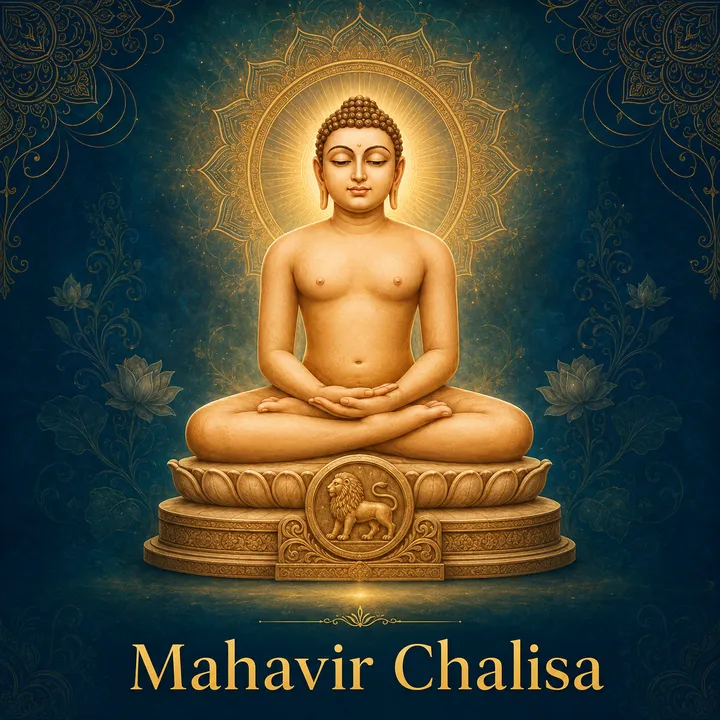
The Mahavir Chalisa is a Hindi devotional hymn to Mahavira, the twenty-fourth and final Tirthankara of the present age in Jainism. Its opening doha bows in turn to the Arihantas, Siddhas, Acharyas, Upadhyayas, and Sadhus — the Panch Parameshthi, the same fivefold reverence that opens the Namokar Mantra — before turning to Mahavira by name. The chaupai verses that follow describe his peaceful, passionless (vitaraga) form, his renunciation in the Digambara — “sky-clad” — manner, and his power to protect a devotee from fear, disease, poison, and fire, in the same protective idiom used by chalisas to other figures.
The name “Mahavir” is shared with an epithet of Hanuman, who is also addressed as Mahavir or Mahaveer in Hindu devotional literature and has his own, unrelated Hanuman Chalisa. This page is about Mahavira the Jain Tirthankara — a historical teacher revered as a liberated soul, not a Hindu deity — and the text below contains no reference to Hanuman or to Rama’s story. It is also a different composition from the aarti “Om Jai Mahavir Prabho,” which is a short refrain-based lamp-song rather than this doha–chaupai–sortha hymn.
Origin and source
The chalisa’s closing verses carry a poet’s signature, “Chandra,” in the line asking that ‘Chandra’ compose the chalisa and bow his head to Mahavira — a convention also seen in other chalisas, where the composer names himself near the end of the text. Beyond this signature, the poem’s authorship is not otherwise documented, and this page does not assign it to a specific historical author.
Much of the hymn is tied to one specific place rather than to Mahavira’s life in general: it names “Chandanpur,” and Chandanpur is the historical name of the site now known as Shri Mahaveer Ji, a major Digambara Jain pilgrimage town on the Gambhir river in Karauli district, Rajasthan. The chalisa’s central story — a cow pouring its milk over a mound, a cowherd (gwala) digging into the mound and finding Mahavira’s image, and a chariot that would not move until that cowherd’s family touched it — matches the temple’s own documented founding legend: the idol is said to have been buried for safekeeping and rediscovered after a cow was seen pouring milk over the spot, and the gwala’s descendants still hold a place of honor in the temple’s rites to this day. The temple holds an annual fair timed around Mahavir Jayanti, drawing Jain, Meena, and Gujjar communities alike and closing with a bullock-drawn chariot procession — details the chalisa’s own verses describe directly.
How it is recited
The chalisa’s own closing sortha gives its recitation practice directly: forty repetitions a day for forty days, with incense burned before an image of Vardhaman (Mahavira). It is recited by devotees, particularly Digambara Jains, seeking protection and well-being, and is especially associated with Mahavir Jayanti, Mahavira’s birth anniversary. At Shri Mahaveer Ji itself, devotion to this history is expressed communally each year through the temple’s Mahavir Jayanti fair and chariot procession, in which the wheel is still said to move only when touched by a descendant of the original gwala family.
Frequently asked questions
How many verses does Mahavir Chalisa have?
Who is Mahavir Chalisa dedicated to?
When is Mahavir Chalisa typically recited?
What language is Mahavir Chalisa composed in?
What tradition is Mahavir Chalisa associated with?
Is an English translation of Mahavir Chalisa available?
Is there a Roman transliteration of Mahavir Chalisa?
Sourcing
Checked against independent sources before publishing — see our sourcing and editorial policy. Spotted an error? Report an issue .